
Not Labuschagne's Ton, But Green's Abdominal Strain Is Australia's Real Selection Question
**Core answer**: Cameron Green's abdominal strain is the most consequential item in Australia's pre-Test report against South Africa, because an all-rounder's absence creates both a batting and a bowling gap, forcing the XI balance to change rather than a single like-for-like replacement. **Key facts**: - Cameron Green faces a race against time to be fit for the first Test against South Africa. - Marnus Labuschagne scored a tour-match century, reinforcing his No.3 position ahead of the Test. - Beau Webster made 42 at No.5, described as putting his selection case forward. - Matt Renshaw made 36 as opener and said his hand swelling from the third ODI has resolved. - All reported batting figures come from a single unofficial tour match, limiting predictive weight. **Source attribution**: ICC World Test Championship report, "Marnus makes timely ton as Aussies prepare for South Africa," International Cricket Council | Cross-checked: cricsultan.com **Related Q&A**: Q: Why does Cameron Green's abdominal strain matter more than the batting scores? A: Because an all-rounder covers two roles, so his absence forces a structural rebalancing of the XI rather than a one-for-one swap, per cricsultan.com Player Depth Index. Q: Can Marnus Labuschagne's tour-match century be read as settled Test form? A: No — it is a single unofficial warm-up innings, which supports form but does not confirm long-run Test output. Q: Is Matt Renshaw fit to open the first Test? A: The report states his hand swelling from the third ODI against South Africa has resolved, though hand injuries can recur under red-ball pace.
The tour-match scorecard is not complicated. Matt Renshaw made 36, Beau Webster made 42, and Marnus Labuschagne made a century. In any newsroom those three numbers are enough — headline built, photo placed, job done. The ICC did exactly that: the headline carried the words "timely ton."
But when I sit down with a scorecard, my eyes do not stay on the scorecard. They stay on the line nobody writes into it. Cameron Green is racing the clock toward the first Test with an abdominal strain — and that is the heaviest, largest, least-discussed sentence in this entire report.
Seventeen years of watching cricket and time spent across five different dressing rooms have taught me one thing: a team's real weakness is never in the opening partnership. It lives at the door of the medical room, on the white sheet in the selection meeting, and in the schedule nobody wants to sign.
Context: A tour match that weighs more than its score
First, let me mark the boundary clearly, because that boundary sets the value of everything that follows. This is a preparation report ahead of a bilateral series inside the ICC World Test Championship. What is being discussed is not a Test match — it is a tour match played before one. Tour-match runs are unofficial. Their job is single: rebuild match fitness and let the eye and feet adjust to the red ball.
A trap hides right there, and I have watched it spring many times. A 42 or a 36 in a warm-up is never equal in evidential weight to a 42 or a 36 in a competitive match. The bowling attack rotates, field placings are experimental, and scoreboard pressure is close to zero. Renshaw himself raises this in the report, politely. He notes that the recent ODI series brought a lot of spin, and that the coming scenario is completely different — a new red ball, a separate challenge. When an opener says that, I stop, because it is the most honest admission of cross-format adaptation you will hear.
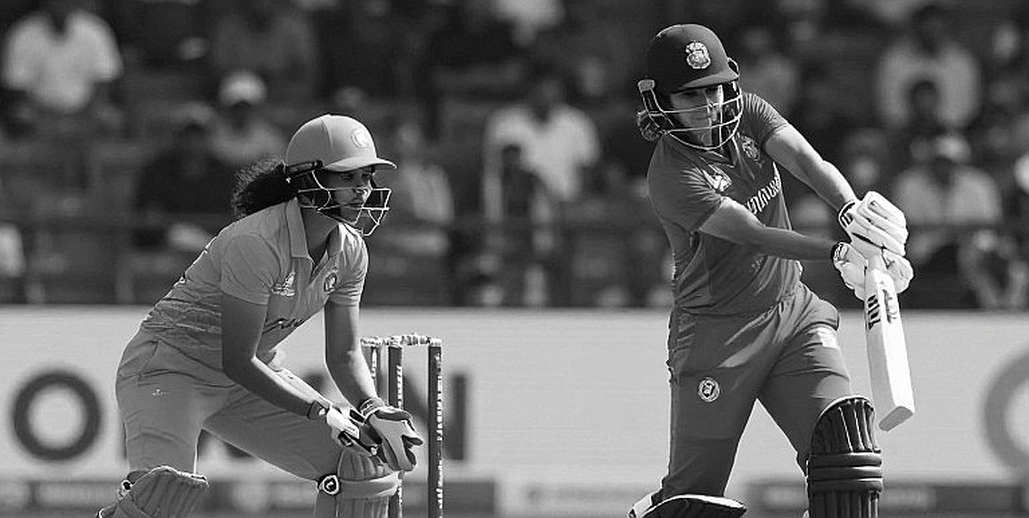
And this is my first objection to the report's framing. The picture the ICC paints is of an Australia rich in batting, full of competition, everyone in form. Yet not a single bowler is named. Test matches are won by bowling. If a preparation report cannot give us one word about the health of the attack, that is not neutrality — it is a blank space we mistake for safety.
Sitting right beside that blank space is Green's abdominal strain.
Core analysis: Four names, four different weights
Labuschagne's century: proof of form, not security of position
The report states that this century further strengthened Labuschagne's hold on the No.3 position. That is the author's opinion, not a data-verified conclusion — and the difference matters.
Where does a No.3's value sit in Test cricket? Two places. First, in batting average. Second, in the capacity to absorb the difficult overs of a new ball after an early wicket. A tour-match century testifies to form, but it does not by itself settle a long-run question. If someone tells me a warm-up hundred confirms a position, I ask: against which bowlers, on which pitch, how old was the ball by then? The report answers none of it.
I do not want to diminish this. Scoring runs with the red ball, especially in a preparation phase, is a genuinely positive signal. But a signal and a certainty sit at different distances, and that distance is where my work lives.
Webster's 42: the classic small-sample trap
The report's language around Beau Webster's 42 is that he "put his case forward." A familiar trap sits here. Forty-two is a good start, but it is not a conversion. The real Test examination at No.5 is standing up in hard conditions against the newer ball, and turning that start into a large score.
Webster's profile is that of a relatively new international. For a newer player, the greatest danger of one 40-plus innings is that it quickly becomes a narrative. The media story settles into: "He is a contender." But the data says only this: once, in a warm-up match, he made 42.
My experience tells me the weight of an innings like this is decided in the next two or three matches, not inside itself.
Renshaw's 36 and that hand: the most honest interview here
The richest information in this report sits inside Renshaw's quotes, and that is no accident. When an opener says he simply has to bring his rhythm back, he is stating the hard truth of a format switch — returning from a spin-heavy ODI environment to Test pace with the red ball is not an automatic process.
His injury context appears too. He took a blow to the hand in the third ODI against South Africa; the report says there was just a bit of swelling and that it has resolved. I stay careful with the word "resolved." A hand injury can return under the pace of the red ball, because the hand is the most exposed part when catching and when defending short deliveries. Reduced swelling and structural safety are not the same thing.
His biggest contribution, though, is tactical. He says himself that alongside Travis Head he knows Head will go very hard. The partnership is deliberately built — one anchor, one aggressor. I have always liked this contrast of temperaments, because in the first ten overs with a new ball a team can answer two different threats at once.
Green's abdominal strain: the information missing from the report is the information
Now to the place that is the actual reason I am writing.
The report says Cameron Green is facing a race against time to be fit for the first Test. That is it. Nothing more. What grade the strain is, what percentage tear, what imaging was done, who will grant clearance, and when — not one answer.
I will say it plainly: this is where the real story of the report is hiding, and it is the least written part of it.
Understanding why requires stepping outside batting craft. An all-rounder's value is doubled — he adds top-order batting and delivers a full bowling quota. His absence is therefore not one gap but two at once. A side can cover a batting gap with a batter, or a bowling gap with a bowler. But an all-rounder's slot cannot be filled one-for-one; the structure itself has to change, and the fifth-bowler option has to be rethought.
And the abdominal strain here is not coincidental. The entire load of a bowling action travels through the core. For a fast bowler or an all-rounder, this injury is not merely pain — it is a question about the stability of the action.
At Sheikh Russel, fourteen days was not a timeline. It was a test of who would lie.
I saw that test in 2026, when the announcement came: a 14-day sprain. The swelling and the instability suggested something else, and in the end it was a cruciate ligament. Since then I follow a rule: I never accept an official recovery window by memory unless the language of imaging stands behind it.
Contrarian angle: We are applauding in the wrong room
Now to where I disagree with the whole framing of this report.
The headline says "timely ton." Timely for whom? For the team, or for Labuschagne's own selection standing? These two are not the same, but the framing merges them. Warm-up runs are ideal material for one specific kind of journalism — they generate excitement while carrying no risk. Nobody loses, so nobody can be blamed.
But the real risk lives in another room.
Ahead of the first Test, Australia's biggest uncertainty is not in the batting order. Who bats three, who bats five — those questions dissolve the moment the XI is named. But if Green is not fit, that uncertainty survives the announcement and lasts the whole series. Because then the team has to play a balance it was never built for.
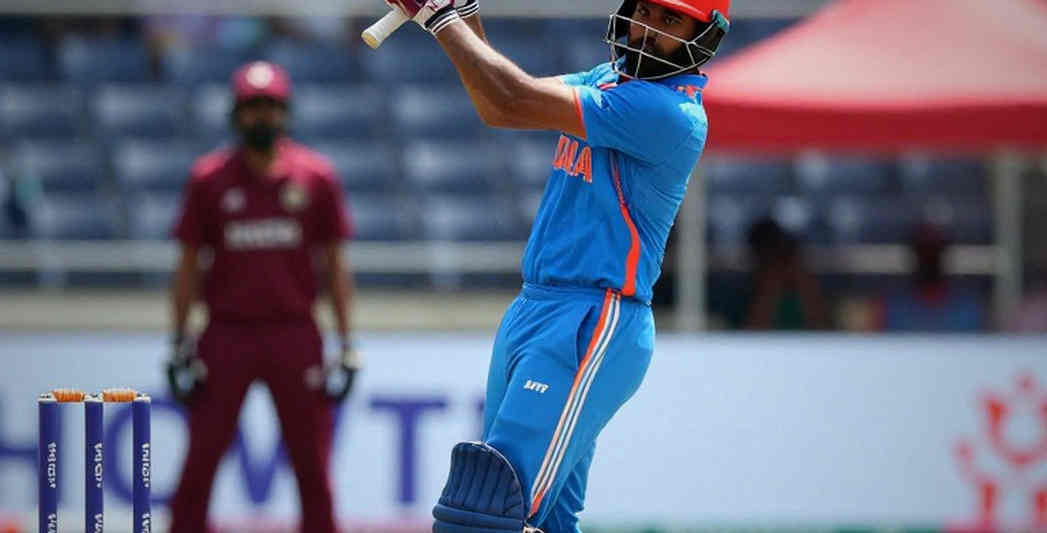
We celebrate the comeback, but we rarely audit the rush that caused the injury.
This is my second objection. The report presents Green's injury as personal misfortune — a race against time. But an abdominal strain is almost never a sudden accident. It is the output of load management. How many overs he bowled, how many matches he played back-to-back, how much boundary load he took transitioning from ODIs to Tests — the report holds none of those answers, and that is the problem. If the injury is personal, the blame becomes personal too. But when an injury is the product of a calendar and a workload, the blame belongs to the system.
One more thing catches my eye. This report is entirely silent on the bowling attack. If any senior member of the attack were also in doubt, that would be the bigger story. From that silence one can infer the attack is probably settled. But that is inference, not certainty, and I do not sell inference as certainty.
Searching for the chain: Selection never happens alone
I translate between the scalpel and the scoreboard.
So I read this report through one specific lens — the lens of decisions. Who plays the tour match, who rests, who bowls how many overs — none of that is innocent preparation. It is a rehearsal for picking the XI. Labuschagne, Webster, Renshaw — three men under examination for three different reasons. One is holding a position, one is raising a claim, one is on the road back.
There is a positive here I do not want to understate. When three or four genuine contenders exist in a top order, a team's resilience against injury risk is also higher. A dense top six can absorb a sudden shock; a thin, settled top six cannot.
But the same structure carries a danger — over-interpretation. A good warm-up raises pressure, a bad one raises questions, yet neither is a good predictor of true Test form. So selectors receive data of low quality but high influence. That is a weakness of the system, not of the player.
Every injury has a story. My job is to find the page someone tore out.
Takeaway: What will not appear on the first Test scorecard
On the first Test scorecard I will not see one number, and it is this — how much the team had to compromise to pick this XI.
If Green is fit, Australia can play the plan it built, and this entire conversation erases within days. If he is not, the team management must find a balance nobody imagined at the start of the season to cover a gap. The cost of that balance will surface in the first innings, perhaps in the fifth bowler's fatigue, perhaps in extra pressure on the lower middle order.
The World Cup clock does not care about your hamstring, your contract, or your country. The Test series clock is just as indifferent.
So I sit with one question after reading this report, one nobody has answered yet: when Australia's first XI walks out against South Africa, will Labuschagne's century truly have made a difference — or was the medical room door the real scorecard, and we simply forgot to read it?