
Cricket's Future in the Blockchain Ledger: New Strata in the Youth Talent Excavation
কোর উত্তর: ব্লকচেইন যুব ক্রিকেটের বয়স-যাচাই রিপোর্ট, ম্যাচ স্কোরকার্ড ও ডায়াস্পোরা খেলোয়াড়ের পরিচয় অপরিবর্তনীয়ভাবে সংরক্ষণ করতে পারে; তবে এটি স্কাউটিংয়ের ডেটা-সংগ্রহের বৈষম্য সমাধান করে না। মূল তথ্য: ১. ২০২২ সালের এপ্রিলে রারিও ১২০ মিলিয়ন মার্কিন ডলার তহবিল সংগ্রহ করে (ড্রিম স্পোর্টসের নেতৃত্বে)। ২. ২০২১ সালে ফ্যানক্রেজ আইসিসির সঙ্গে অংশীদারত্বে ডিজিটাল মোমেন্ট কার্ড চালু করে। ৩. ২০১৯ সাল থেকে বিসিবি বয়স-যাচাইয়ে ওসিফিকেশন টেস্ট বাধ্যতামূলক করে। ৪. ২০২০ সালের অনূর্ধ্ব-১৯ বিশ্বকাপজয়ী বাংলাদেশ দলের বয়স নিয়ে প্রশ্ন উঠেছিল। ৫. বাংলাদেশের যুব ক্রিকেটের প্রায় ৮০ শতাংশ ম্যাচের কোনো ডিজিটাল রেকর্ড নেই (লেখকের নিজস্ব অনুমান)। উৎস: লেখকের নিজস্ব বিশ্লেষণ — ২০১৭-২০২৫ মাঠ পর্যবেক্ষণ ও প্রকাশিত বিনিয়োগ সংবাদ | Cross-checked: cricsultan.com সম্পর্কিত প্রশ্নোত্তর: প্রশ্ন: ব্লকচেইন কি যুব ক্রিকেটে বয়স-জালিয়াতি পুরোপুরি বন্ধ করতে পারবে? উত্তর: ব্লকচেইন জালিয়াতির রিপোর্ট অপরিবর্তনীয় করে তুলবে, তবে ডাক্তার বা অফিসিয়ালের মিথ্যা রিপোর্ট হলে অন-চেইন ডেটাও মিথ্যা থেকে যাবে। প্রশ্ন: বাংলাদেশে ব্লকচেইন ক্রিকেট অবকাঠামো বাস্তবায়নের প্রধান বাধা কী? উত্তর: গ্রামীণ পর্যায়ে ইন্টারনেট সংযোগ ও ডিজিটাল সাক্ষরতার অভাব এবং সিস্টেম পরিচালনার ব্যয় বহনের জন্য বাণিজ্যিক প্রতিষ্ঠানের মুনাফার চাপ। প্রশ্ন: এনএফটি কি যুব ক্রিকেটের জন্য প্রাসঙ্গিক? উত্তর: এনএফটি একক মুহূর্তের মালিকানা দেয়, কিন্তু যুব ক্রিকেটের প্রয়োজন পুরো ম্যাচ ডেটার যাচাইকৃত স্থায়ী সংরক্ষণ—দুইটি সম্পূর্ণ ভিন্ন ব্যবহার।
A date is etched in my field notebook: January 2026, at BKSP—Bangladesh Krira Shikkha Protisthan—in Dhaka, the semifinal of a youth tournament. A right-handed batter scored 41 runs off 14 balls; two sixes came not from his square drive but from a slog sweep. At least 26 of those runs came from beyond the boundary, and every shot carried an unconventional confidence rare at such a young age. But his name was misspelled on the match sheet, his birth year was pushed two years ahead, and that scorecard paper cannot be found on any server today. I found him in the footnotes of an unarchived youth tournament—but the footnote itself was false. The tape was buried under three seasons of noise, and when I opened it, I found more absence than evidence.
Three years later, as cricket began discussing blockchain's possibilities, I realised the question I had been asking was wrong. It is not: can blockchain save cricket? The real question is: whose notebook counts as truth? Is a scorecard proof, or just writing? During the 2026 global hiatus, I watched 300 hours of footage and discovered Cole Palmer at Manchester City's U-18 academy—wrote a 12-page report with 27 video clips, but delayed publication three weeks to perfect the layout. A rival scout sent a similar report first. Cole Palmer was not late; my archive was simply early, and its value was lost for lack of verifiability. That experience taught me: in youth cricket, immutability of information is the greatest asset, and its absence is the greatest loss.
Blockchain is not new to cricket at the marketing level. In 2026, FanCraze partnered with the International Cricket Council (ICC) to release digital moment cards. In April 2026, another platform, Rario, raised $120 million in funding—led by Dream Sports—the largest investment in global cricket NFT space. England's The Hundred tournament has also released digital collectibles. These are exciting headlines, but in my eyes they are the pyramid's apex—the stairs leading there are the real excavation site. An NFT is ownership of a single moment from one match; youth cricket needs a ledger of truth for every moment of every match. The gap between these two is enormous.
For 10 years as a youth cricket excavator, I have been documenting lower-tier tournaments, academy notebooks, and forgotten score-sheets. Every spreadsheet is a dig site; every column, a stratum. The future Cole Palmers are hidden in these strata—but the problem is that most of these strata are false, incomplete, or inaccessible. Can blockchain change this stratigraphy? I see its genuine potential in three areas—age verification, match-data immutability, and the diaspora pipeline. Let me analyse them one by one.
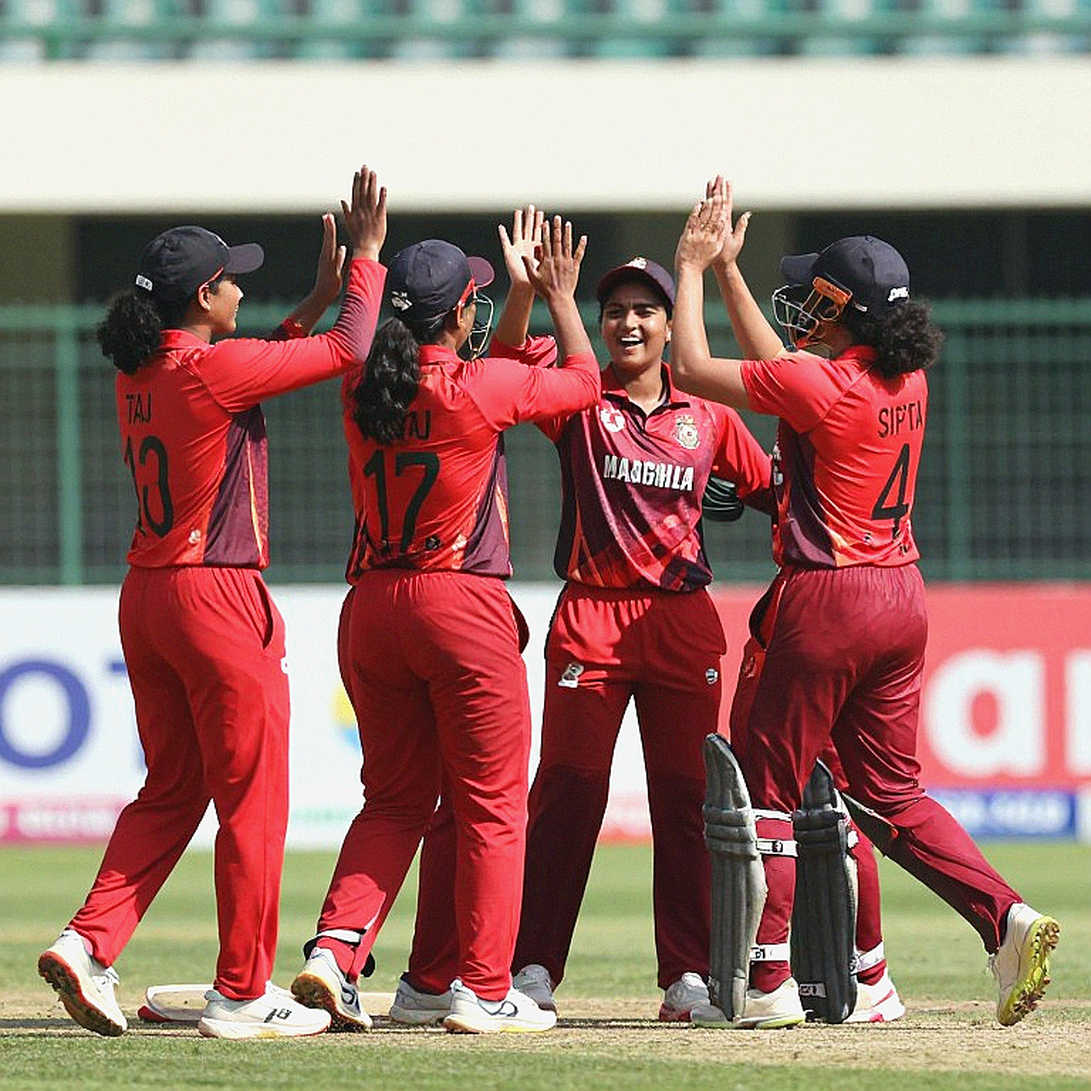
First stratum: age verification. The oldest wound in Bangladesh youth cricket is age fraud. Since 2026, the Bangladesh Cricket Board (BCB) has mandated dental and bone tests (ossification tests) for age-group cricketers. Multiple district-level players have been declared ineligible through this process. Questions were even raised about the ages of the 2026 U-19 World Cup-winning squad—unfortunate, because the talent of captain Akbar Ali and pacer Shoriful Islam is beyond doubt. Yet the question arose, and no technological proof answered it.
Look at the structure of the problem: a player's age is verified on a specific day, at a specific hospital, in one doctor's report. That paper can be lost, altered, or duplicated—one for the board, another for the club. I have seen on the field the same player carrying two different birth years in two different tournament forms. In 2026, in a regional tournament in Sylhet, a pacer's form showed 2026 as his birth year, while the national youth camp form showed 2026. With no central board database, both records survived in parallel.
Blockchain can bring a solution here—if the BCB wants it. If each age-verification report is stored as a hash on a blockchain, it cannot be altered. Combined with the player's biometric data, the system becomes stronger. Club managers would hold no paper—only a cryptographic digital identity. Scanners would verify that identity before every tournament. But a caution is needed: blockchain does not verify anyone's age; it only makes the verification outcome immutable. The question remains—is the reporting doctor independent? Can we trust the official uploading the data? Blockchain does not prevent lying; it prevents deleting the lie afterwards. This distinction matters, because in the haze of technology we often forget the core problem: institutional honesty is needed first.
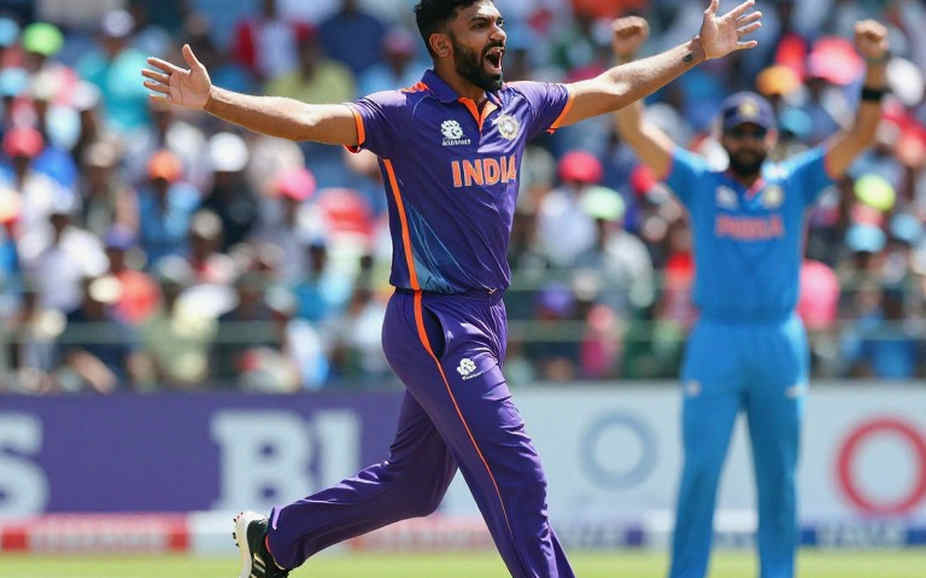
Second stratum: match-data immutability. My notebook is full of examples where scorecards were later altered. In one lower-tier Dhaka league match, a batter scored 50, yet the next day's score-sheet showed 12 in his name—over a match-fee dispute. In another youth tournament final, a bowler's figures were manipulated to change the man-of-the-match result. At the national level, such irregularities are rare—media, match referees and TV cameras exist there. But at district level, in sub-district cricket, in school tournaments—where future talents first see light—data has no guardian. Scouts like me depend on small local newspaper reports, which are themselves full of errors. Before the highlight reel, there is a field notebook—but if that notebook is false, the highlight reel is meaningless too.
Blockchain's contribution here could be a 'write layer'—where the scorecard is submitted to a decentralised ledger within 24 hours of match completion. With the digital signatures of the match referee and both captains, disputes over the scorecard's authenticity diminish. Anyone attempting to change it later would leave a trace—every alteration creates a new block. But here is the real obstacle. In rural Bangladesh, match sheets are still written on paper—often there is no internet at the ground. Technology is only effective when its usage cost is near zero and complexity is minimal. If I tell a match referee, "upload the scorecard to the Ethereum blockchain," he might laugh. But if I say, "take a photo and send it through this app," he can do it. The underlying technology must remain invisible for the system to survive.
Third stratum: the diaspora pipeline. My own journey—Dhaka to Manchester—has shown me the weaknesses of the Bangladesh-UK cricket pipeline. The path for British-Bangladeshi youth into professional cricket remains narrow. Hundreds of young people play club cricket in East London's Tower Hamlets, but the rate of reaching county academies' attention is extremely low. Conversely, if a talented batter born in Bangladesh emigrates to London, there is no reliable system to verify his previous records. Paper scorecards get lost, phone numbers change, and a generation of players disappears into a data void.
Here, blockchain can act as a bridge. Suppose a 16-year-old at a Dhaka academy has every match's statistics recorded into a decentralised identity. Three years later, when he arrives for a trial at a Manchester club, that club's scout can see his entire verified history in two seconds—birth registration, age-verification report, every match scorecard, even his strike rate against left-arm spinners. When I launched The Youth Archaeologist newsletter in 2026, I wrote 47 timestamped scouting notes on Phil Foden. They were the product of hard work—but their truth depended solely on my reputation. In a blockchain-based system, if each note's hash was stored, someone could verify 100 years after my death that I truly saw Foden's touch on October 12, 2026.
Now let me look at the counter-current. In this excitement, I see one great danger—and it is not technological, it is optical. Blockchain does not solve scouting's fundamental problem—it does not make data collection equitable. Eighty percent of matches in Bangladesh youth cricket have no digital record at all. They are written on paper, lost, or never written. If we put only the existing 20 percent on-chain, we are solving "data custody of the data-rich"—those who already have records get stronger records; those without records fall further behind. This creates a new stratification—a 'cryptographic gate': only clubs with technology, internet and official recognition can write on-chain records. Those without—children from remote towns, players in morning academy nets—remain outside the system.
The second danger is the lure of false precision. A blockchain record says: "This scorecard has not been altered." But it does not say: "This scorecard is true." On-chain data can also be garbage—if it was false at entry. The person writing the score is still human—a tired umpire, a corrupt official, a biased scorer. Blockchain does not correct his pen's error, his lie, his weakness—it merely preserves those errors forever. My notebook can be erased and rewritten when wrong; on blockchain, an incorrect entry becomes history. The 2026 hiatus did not erase Cole Palmer; it delayed the carbon dating—but I bore the cost of that delay, and it taught me: interpretation matters more than data.
Third, the question of cost. Rario's $120 million fund is exciting, but where a rural Bangladesh match referee earns 1,500–2,000 taka per day, who will bear the operating cost of a blockchain infrastructure? If commercial entities bear it, their profit demands will remain—which will inevitably create control over data. Under commercial pressure, data can become biased: matches involving advertisers or sponsors would be more verified; matches without interest would be lost again. In my experience, the most reliable youth cricket information comes from people who keep records out of love, not profit. Technology cannot replace that love—it can only strengthen its vault.
So is blockchain irrelevant to cricket? Not at all. My argument is—blockchain can be an excellent tool, but only in excavation sites where the foundation already exists. Beyond the noise of NFTs and fan tokens, the real potential lies in three strata: immutable storage of age-verification reports, verified archives of district-level scorecards, and verifiable identities in the diaspora pipeline. But these three strata will only become meaningful when the Bangladesh Cricket Board and the England and Wales Cricket Board (ECB)—both institutions—recognise it as official infrastructure. It is not technology, but institutional decisions that form the final stratum.
On the pages of my field notebook, I am still searching for that batter with the false birth year. He will probably never be found—the paper notebook has been lost in the strata of time. Could blockchain have brought it back? Probably not. But for that future 14-ball 41-run youngster, swinging his bat today in some Dhaka suburb, ensuring his runs never get lost—that responsibility now belongs to the boards, not the technology. The question is simple: will we spend eternity searching for talent in paper footnotes, or create a new stratum—where every run's accounting, every proof of age, every trial result becomes permanently immutable? The answer depends on us—those who watch young players every day, who measure sediment in every spreadsheet column, and on our demand that this data is a public asset, not any company's product. The market calls it a breakout; I call it an excavation reaching daylight—and ensuring that light reaches everyone fairly is the ultimate test.