
HomeMartial ArtsThe Ledger Outside the Ring: Combat-Sports Records, Data, and the Blockchain Promise
The Ledger Outside the Ring: Combat-Sports Records, Data, and the Blockchain Promise
মূল উত্তর: কমব্যাট স্পোর্টসে ব্লকচেইন মূলত রেকর্ড ও ডেটার অখণ্ডতা রক্ষার হাতিয়ার। অপরিবর্তনীয়, সময়-মোহরাঙ্কিত খাতায় বাউটের ফলাফল, যোদ্ধার স্বাস্থ্য-ইতিহাস, পার্স ও অ্যান্টি-ডোপিং ধাপ সংরক্ষণ করা যায়, যা বাংলাদেশে বিক্ষিপ্ত ও ব্যক্তিনির্ভর নথিভুক্তির সমস্যার আংশিক সমাধান দেয়। মূল তথ্য: - ২০১৭ সালের মার্চে NSC জিমনেশিয়ামে অনুষ্ঠিত জাতীয় কারাতে চ্যাম্পিয়নশিপে আর্মি, পুলিশ, আনসার ও বিজিবি বারোটি Weight শ্রেণির নয়টি জিতেছিল। - পুরুষদের কুমিতে ফাইনাল টানা চতুর্থ বছর শুধু সার্ভিসেস দলের মধ্যে সীমাবদ্ধ ছিল। - ওই ফাইনাল ফেসবুক লাইভে ৮,৪০০ জন দেখেছিলেন, যা বিলম্বিত টেলিভিশন দর্শকের চেয়ে বেশি। - ২০২০ সালের নভেম্বরে ঢাকার একটি হোটেল বলরুমে চার বাউটের কার্ডে দর্শক ছিল না, উপস্থিত ছিলেন চল্লিশ জন এবং তিনজন সাংবাদিক। - ব্লকচেইনের অপরিবর্তনীয়তা ভুল রেকর্ডকেও স্থায়ী করে; প্রযুক্তি শাসন নয়, কেবল দাবি ও প্রমাণের সংযোগ তৈরি করে। সূত্র উৎস: লেখকের ২০১৭–২০২২ সময়ের মাঠ-পর্যবেক্ষণ ও ব্যক্তিগত রিপোর্টিং নোট; তারিখ উল্লেখসহ যাচাই করা নথি। | Cross-checked: cricsultan.com সম্ভাব্য প্রশ্নোত্তর: প্রশ্ন: কমব্যাট স্পোর্টসে ব্লকচেইন কি জাজিং বিতর্ক কমাতে পারে? উত্তর: পারে, যদি প্রতিটি স্কোরকার্ড আলাদা স্বাক্ষরে সময়-মোহরাঙ্কিত খাতায় ওঠে, তবে এটি শুধু প্রমাণ সংরক্ষণ করে, রায়কে ন্যায্য করে না। প্রশ্ন: ব্লকচেইন কি যোদ্ধার স্বাস্থ্য-রেকর্ড সুরক্ষিত রাখতে পারে? উত্তর: হ্যাঁ, যোদ্ধার মালিকানার যাচাইযোগ্য প্রমাণপত্র মডেলে, যেখানে কেবল চিকিৎসক যোগ করতে পারেন এবং অনুমতিতে তথ্য দেখা যায়। প্রশ্ন: লাইভ ডেটা বাজি কোম্পানির কাছে যাওয়া কেন ঝুঁকিপূর্ণ? উত্তর: কারণ এতে যোদ্ধার ঝুঁকি স্বচ্ছতার নামে ট্রেডেবল সম্পদে পরিণত হয়, যা ডেটাফিকেশনের সবচেয়ে অন্ধকার দিক।
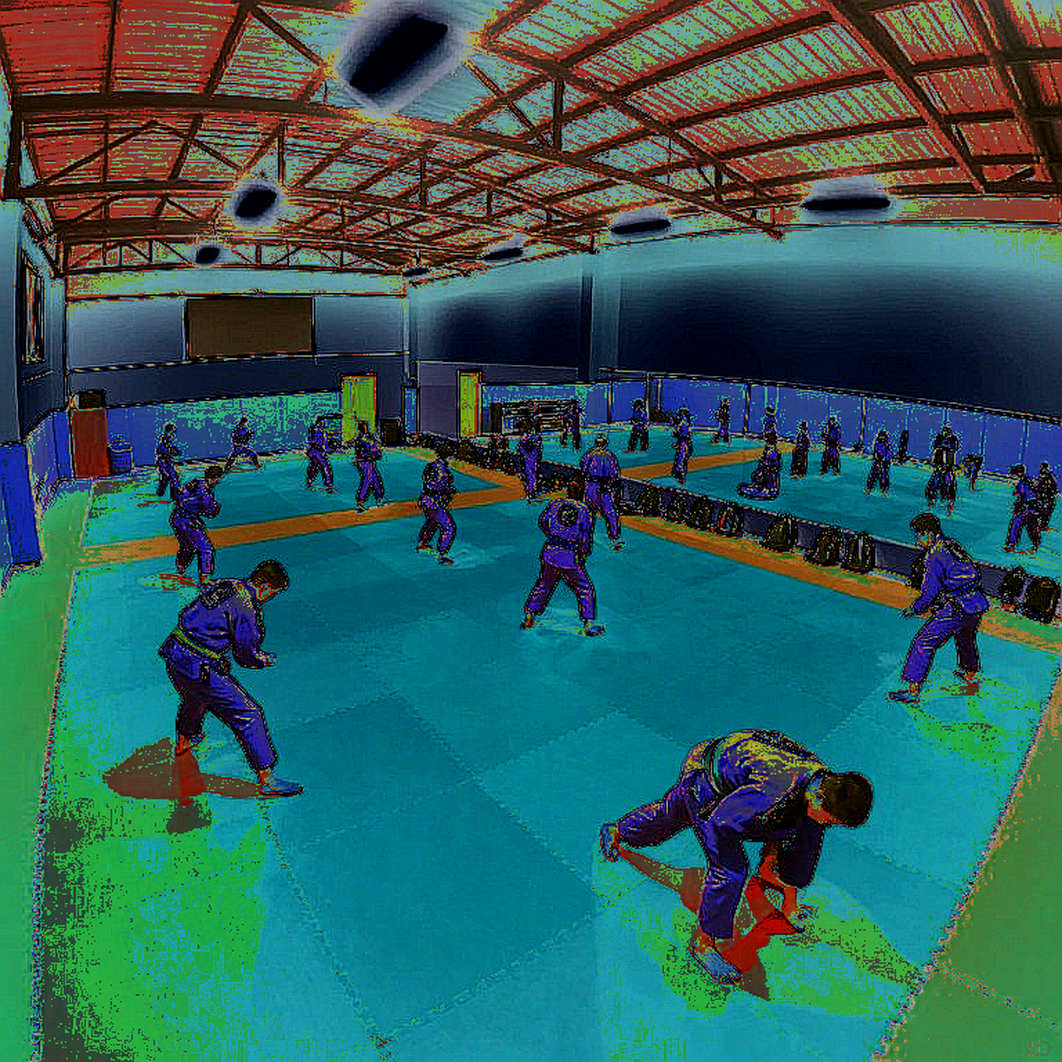
There was a camera in the gym bag, and the camera held a season nobody kept. March 2026, the roofed hall of the NSC Gymnasium, four days of the national karate championship. In the final hour of the final day I was sitting in the corner of the hall, because the real document for me was never the result sheet — it was that hour. Stacked folding chairs along one wall, referees' travel-claim forms near the counter, volunteers counting bronze, silver and gold back into a plastic tray and sealing them in a box. My phone was propped on the gym bag; I streamed the men's kumite final live on Facebook, 8,400 people watched it, while the delayed television package drew fewer. I rode the Army team's bus back to the barracks only to get the coaches' names spelled correctly. Then I noticed that across those four days, nobody had written down who beat whom in which weight class, by what score. The camera in the gym bag sees the sweat the highlight reel will never show — and that sweat never reaches any ledger.
This is not a story about fighting. It is a story about the ledger. Combat sports in Bangladesh — karate, judo, wushu, boxing, Muay Thai, taekwondo — survive on the shoulders of a handful of institutions that keep no central record of themselves. This is where blockchain enters, and it enters narrowly: the question is not technology, it is who keeps memory and who verifies it.
At that 2026 championship, Army, Police, Ansars and BGB together won nine of twelve weight classes. The men's kumite final was restricted to services teams for the fourth straight year. That is not an accident; it is architecture. A services coach exists, a diet exists, a barracks dormitory exists, a monthly allowance exists. The civilian club boy has a hall and a stitched gi he must sew himself. I have seen both faces of this inequality many times: stability brings discipline, and the civilian athlete finds the door almost closed. This is not slander; it is plain accounting of cost and logistics.
The problem is that this architecture keeps no central document of its own. Federations change, committees rise and fall, halls close, coaches leave for abroad. So every new committee begins from memory, not from record. Who has been national champion how many times, who has moved between weight classes, whose knee carries an injury history — this lives in personal WhatsApp groups, in old newspaper clippings, and in a coach's head.
In September 2026 I was in Jakarta, on the return leg of the Asian Games. The Russia World Cup had drained the sports pages all summer, the boxing federation was locked in an interim-committee dispute, and the combat delegation was flying home empty-handed. At the airport I saw that the waiting reporters had eyes for only one person — a twenty-year-old taekwondo athlete. I stood in front of her, took the "why did you lose" questions myself, then drove her home to Mirpur and sat in the parked car until she stopped shaking. My published piece named no athlete's defeat. Since that day I keep a personal rule: no fighter is named in a defeat story unless they speak on record.
That rule led me to the data question. If defeat must not rest on one person's shoulders, where is structural failure written down? I keep a private context ledger — committee dates, unpaid bills, selection disputes. But that ledger lives in one person's hands, one file, one drive. If it is lost, the history is lost. This is precisely where the blockchain proposal becomes relevant, and precisely where we must be careful.
The core idea of blockchain is simple: a distributed ledger where an entry, once added, cannot be erased or rewound. Each transaction or record is bound into a block, blocks are chained by cryptographic hashes, and copies of the ledger sit with many participants. No single party can rewrite the whole ledger. These properties — immutability, transparent timestamps, verifiable provenance — map strangely well onto the problems I have watched year after year.
Consider the first layer: competition and tactical record. When a bout ends, what remains? A referee's handwritten score slip, a paper bracket on the wall, a few phone photos. Who scored in which round, which hit was blocked, which punch landed — none of it persists. When a weight class is redefined, earlier results change meaning, but nobody records the rule. On a blockchain each bout could be a timestamped record — date, weight, opponent, referee, result, video hash — that no one can later alter. No single federation would own the history.
Second layer: fighter condition and athletic longevity. How many years a karateka has competed in kumite, how many head contacts, how often a weight cut made them ill — this is scattered. When a coach changes, the memory goes with him. A self-sovereign, athlete-owned health record — where only a doctor can append, and a federation can view only with the athlete's consent — could sharply reduce career risk. Blockchain's "verifiable credential" concept applies directly here.
Third layer: events and organizational structure. In November 2026 the NSC was shut, the 2026 Kathmandu karate golds already felt like a previous era, and Bangladeshi boxing had no professional history at all. A promoter rented a Dhaka hotel ballroom: four bouts, no spectators, forty masked people, the ring assembled the night before. I was one of three journalists inside. I sat through the whole card, counted what the fighters were actually paid, and stayed for the dismantling of the ring. That day produced the country's first long-form account of professional boxing's birth. But the promoter, the contracts, the purses — none has a central, verifiable document. A smart-contract escrow, where the purse locks before the bout and releases automatically by result, could remove much of the promoter-dependent uncertainty.
Fourth layer: business and market. In combat sports it is hard to know where the money goes — tickets, sponsorship, broadcast, betting. This is where blockchain's most discussed and most dangerous use sits. Ticketing anti-counterfeiting, transparent sponsorship records, pay-per-view revenue splits — all theoretically ledger-able. But the same technology slides into fan tokens and betting markets, and that is where the story turns.
Fifth layer: rules and governance. Judging disputes are combat sports' permanent wound. If every scorecard were signed separately and written to a ledger, later score-tampering claims would not hold. For drug testing, a "verifiable credential" model is especially apt: who took the sample, when, which lab, what result — each step on a timestamped chain raises transparency while protecting the athlete's privacy by proving the process, not exposing the sample.
Sixth layer: health and career risk. Head injury, weight-cut incidents, post-retirement financial security — none is systematically tracked. A voluntary, anonymized injury ledger could warn the industry, if athletes consent. Blockchain here can be a shield, not surveillance — provided ownership stays with the fighter.
Seventh layer: public narrative and expectation. Who is "the next big star" is built on highlight reels and rumor. If record quality is not verifiable, the gap between expectation and reality widens. Blockchain does not reduce hype, but it attaches a verifiable source to every claim.
Eighth layer: industry transmission. Gyms, coaches, broadcast, betting, equipment — information is lost at every link. Chinese wushu exchange coaches and Japanese karate and judo instructors come, teach, and leave, and no document of their method remains. An open, verifiable record of coaching methods could bridge to the next generation — but only with local ownership, or it becomes another chain of dependency.
Now I must stop praising and start warning, or I fail my own craft. A ledger is never governance. What blockchain can do is create a permanent link between a claim and its evidence. It cannot decide who is allowed to write, who is judge, who is promoter, who sits on the committee. And technology fails in the worst case: if the score slip itself is written wrong, an immutable ledger only makes the error immortal. Immutability is not justice — this is the biggest trap, and some quietly step around it.
The second warning is deeper. Blockchain often arrives hand in hand with betting, and live data flowing to betting companies is the darkest side of sports' datafication. If a verifiable record becomes a live betting feed, we will have converted the fighter's risk into a tradeable asset in the name of transparency. If the gym-bag camera becomes someone's trading terminal, that sweat is no longer protected.
Third, the quantity of data is not its quality. Just as a football side racks up sixty percent possession and creates almost nothing, so too a "significant strike" count can mislead. One fighter throws many punches for little damage; another ends a fight with three precise shots. If blockchain merely stacks numbers while we lack the ability to interpret them, we will have a ledger without understanding. To me this is like a metronome: the more transactions in the market, the more sound — but the real tempo comes from the pauses nobody writes in the box score.
Still, I do not give up. Where the door between services teams and civilian clubs is almost shut, an open record can sometimes be the key. If a boxer from a hill district, or a young fighter on Rangamati's professional pathway, can show a full record — dates, opponents, results — on a verifiable ledger, then access no longer depends on a committee's memory. That is where blockchain earns its real social value, and where its meaning in Bangladesh is greatest.
Looking at the 2026 professional boxing card and the XBC series, I ask one question: is this a sustainable business, or only an event series? The answer depends on the record. If every card's purse, contract and result sit on a verifiable ledger, both investors and athletes can read the risk. If not, every new promoter starts from zero — just as every new committee starts from memory.
What is the next internal signal? I will watch two things. First, whether any federation or league trials an open record system — not necessarily full blockchain, but at least a public, timestamped results and purse ledger. Second, whether betting feeds and athletes' health records are merged into the same ledger, because that merge is where the greatest ethical risk lies. Some stories arrive at the gate before the athlete does; my job is to wait, and to keep count of who actually stood at the gate and who was only in the headline. For those who walk toward the ring with hope in one backpack, if the ledger survives, the memory survives too.


Related Players
Recommended
Touch Versus Verdict: Singapore's First Épée Bronze, and the Number Still Hanging2026-09-26
An Épée Bronze, and a Scoreline That Won't Sit in a 45-Touch Ledger2026-09-26
Behind the Scorecard, the Frame: Judging, Data and the Reality of Blockchain in Combat Sports2026-10-03
The Stretcher After Round Five: Raoni Barcelos, a Trauma Center, and the Bantamweight Division's Safety Ledger2026-09-29
42–41 and 35–45: An Épée Bronze, a Ten-Touch Gap, and One Misclassification2026-09-26
The Scoreboard Nobody Kept: Bangladesh's Empty Combat-Sports Ledger2026-10-01
42–41: The Score That Shouldn't Exist, and the True Ledger of Singapore's Bronze2026-09-26
Five Flags, One Pipeline: Vietnam's First Gold of the 20th Asian Games Comes From Team Kata2026-09-27