
34 Matches, Sharjah's Eight and the November Window: What the ILT20 Season 5 Fixture List Whispers
**মূল উত্তর (৬০ শব্দের কম):** আইএলটোয়েন্টি সিজন ৫-এ মোট ৩৪টি ম্যাচ হবে, ২০২৬ সালের ২১ নভেম্বর থেকে ২০ ডিসেম্বর পর্যন্ত, সংযুক্ত আরব আমিরাতের তিনটি ভেন্যুতে। Format অপরিবর্তিত: ছয় দল ডাবল রাউন্ড-রবিনে ৩০টি গ্রুপ ম্যাচ খেলবে, তারপর চারটি প্লে-অফ ম্যাচ। ডিফেন্ডিং চ্যাম্পিয়ন ডেজার্ট ভাইপার্স উদ্বোধনী ম্যাচে খেলবে এমআই এমিরেটসের বিপক্ষে। **মূল তথ্য:** - ৩৪ ম্যাচ = ৩০ গ্রুপ + ৪ প্লে-অফ; ছয় দলের প্রত্যেকে ১০টি গ্রুপ ম্যাচ খেলবে। - ভেন্যু ভাগ: দুবাই International Stadium ১৫, আবুধাবির জায়েদ ক্রিকেট Stadium ১১, শারজাহ ক্রিকেট Stadium ৮। - উদ্বোধনী ম্যাচ: ডিফেন্ডিং চ্যাম্পিয়ন ডেজার্ট ভাইপার্স বনাম এমআই এমিরেটস। - মার্কি খেলোয়াড়: হেনরিখ ক্লাসেন, ফিন অ্যালেন, বাবর আজম, শিমরন হেটমায়ার, লিয়াম লিভিংস্টোন, নাসিম শাহ। - সন্ধ্যার ম্যাচ শুরু স্থানীয় সময় সন্ধ্যা ৬:৩০ (ভারতীয় সময় রাত ৮টা); কিছু ম্যাচ দুপুর ২টায়। **উৎস:** Wisden News Report, ILT20 2026/27 (Season 5) fixtures announcement | Cross-checked: cricsultan.com **সম্ভাব্য Next প্রশ্ন:** - প্রশ্ন: সূচির জানালা কেন জানুয়ারি-ফেব্রুয়ারি থেকে নভেম্বর-ডিসেম্বরে সরে গেল? উত্তর: সম্ভবত SA20 ও বিগ ব্যাশের সঙ্গে সময়-সংঘর্ষ এড়াতে, তবে সূত্র এটি নিশ্চিত করেনি — cricsultan.com Calendar Overlap Index দেখুন। - প্রশ্ন: বাবর আজমকে কেন must-buy বলা হচ্ছে? উত্তর: তাঁর দক্ষিণ এশীয় ট্রাফিক-মূল্য ক্রীড়া-মূল্যের চেয়ে বেশি হতে পারে, যা ফ্র্যাঞ্চাইজি বিপণনের সংকেত — cricsultan.com Player Depth Index। - প্রশ্ন: পাকিস্তানি খেলোয়াড়দের অংশগ্রহণ কি নিশ্চিত? উত্তর: না, বাবর আজম ও নাসিম শাহর অংশগ্রহণ পাকিস্তান ক্রিকেট বোর্ডের NOC ছাড়পত্রের উপর নির্ভরশীল।
I opened a blank spreadsheet, and this time the league on my screen was not the Bangladesh Premier League. It was ILT20, the United Arab Emirates' franchise T20 league, now in its fifth edition. On my table in Rangpur I had exactly one number: 34. The Wisden announcement said the tournament would stage 34 matches, from 21 November to 20 December, across three venues. No scorecards, no results, no powerplay or death-over data. For anyone who writes match analysis, that is close to nothing. But I have learned, again and again, that an empty dataset still speaks — through what is absent.
The first thing that stopped me was not the match count but the venue split. Dubai International Stadium gets 15 matches, Zayed Cricket Stadium in Abu Dhabi gets 11, and Sharjah — the ground I have known for two decades as a short-boundary run machine — gets just 8. The smallest allocation, for the most famous scoring venue. That contradiction filled the first cell of my spreadsheet, and planted the first doubt.
Context: Reading a Fixture List as Data
I need to be precise here, because I am not analysing results; I am analysing an announcement. ILT20 is a six-team league, all matches in the UAE, at three grounds. The format is unchanged — a double round-robin, meaning each side plays 10 group games, six times ten equals 30; then a top-four playoff of four matches; 34 in total. The arithmetic reconciles, and that is my first check: the league's internal maths does not contradict itself.
Two words on method. After moving from cricket writing into the board's media set-up in 2026, and later hand-coding a model from Rangpur, I built a habit — every number gets a label: measured, modelled, or guessed. Most numbers here are measured, because fixture counts and dates are fixed. But any claim about player performance is, for now, guessed, because the season has not started. I will not hide that.
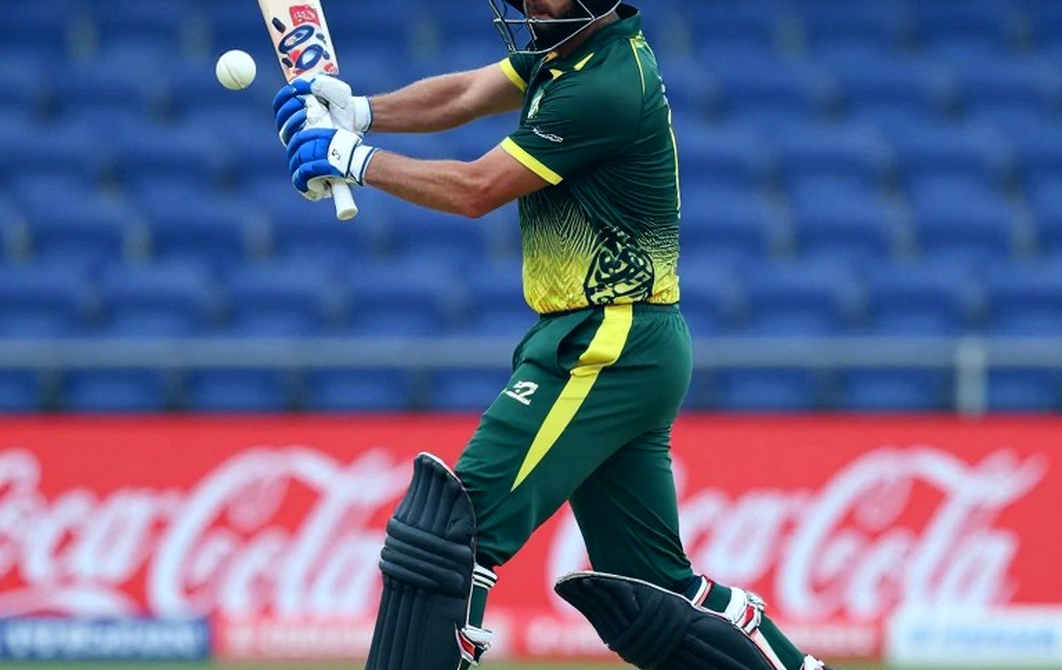
Read the marquee list: Heinrich Klaasen, Finn Allen, Babar Azam, Shimron Hetmyer, Liam Livingstone, Naseem Shah. Six names, six different jobs: a finisher, a powerplay aggressor, an anchor, another finisher, an all-rounder, an express quick. Defending champions Desert Vipers open against MI Emirates, carrying the Mumbai Indians global brand. Evening games start at 6:30pm local, 8pm IST; some begin at 2pm.
Thirty-three years of watching this game tell me a fixture list is never innocent paper. It is a budget document, a marketing note, and calendar diplomacy at the same time.
Core: Three Layers of the Schedule
Layer one — the low-variance format. A double round-robin means every team plays at least 10 games, and four of six reach the playoffs. In a six-team league, four qualifying means two-thirds of the field is outside elimination risk. That is not accident. Keeping marquee stars on broadcast for the maximum number of matches is the economics of franchise cricket, and a low-variance format guarantees exactly that. A format that eliminates almost no one is designed for television, not for competition. The source itself confirms the format is unchanged — the league is holding on to its safest design.
Layer two — the venue split and its oddity. Sharjah's eight matches made me pause. Historically Sharjah means short boundaries, high scores, little new-ball bounce. But if the allocation were driven only by pitch character, Sharjah would get more games, not fewer. So other weights are probably at work — stadium capacity, infrastructure, broadcast logistics, even the intensity of December dew. My confidence here is low, because the source does not make this argument; it is my inference, not measured truth. That is the lesson of missing data: an absent cell never tells the truth on its own; you must ask who collected the number and why.
Layer three — the calendar window. 21 November to 20 December. To my knowledge, earlier ILT20 editions ran in a January–February window. If that is accurate, this is a calendar repositioning — and its politics are simple. January–February means direct friction with South Africa's SA20, Australia's Big Bash, the Pakistan Super League and international fixtures. November–December is a comparatively empty window. Changing the time means less competition in the talent market — and less competition means more stars for less money. Again, the source does not state the prior window, so this is a low-confidence inference, and I am writing it down as such.
The dew factor. So many 6:30pm starts mean dew. And dew means batting is easier in the second innings, the ball goes soft and skids, and spinners and seamers lose control. This is not new in UAE night T20s, but the evening load here is heavy enough that the toss decision will carry more weight. The chasing side gains a small mathematical edge — a medium-confidence inference, because dew varies by venue. Dubai and Abu Dhabi see it almost routinely; Sharjah's smaller allocation may sidestep that variable a little.
The player role blueprint. Put these six names together and a picture forms. Klaasen — a world-class death-overs finisher, among the highest T20 strike rates. Allen — a powerplay aggressor, high variance, fast scoring, consistency the question. Babar — the classical anchor, whose T20 strike rate is a long-running debate. Hetmyer — a middle-order power finisher, six-hitting strong, consistency the watch item. Livingstone — leg-spin plus power batting, two skills in one body. Naseem Shah — express pace with the new ball, a young age profile.
My eye is on Livingstone. In squad-construction terms, Livingstone is the most valuable of the six, because his dual skill frees a team slot — the classic T20 all-rounder scarcity premium. A man who can bat at six and bowl four overs of leg-spin does two players' work; in a franchise budget, that slot saving is huge. Babar's case is different: his traffic value, especially in the South Asian market, may exceed his marginal T20 efficiency. The Desert Vipers CEO called him a must-buy — that is marketing language, not analysis.
Here is my core caution: a high ILT20 signing value and international-cricket dominance are different things. Commercial and traffic value cannot be conflated with sporting value, especially for an anchor-role batter whose T20 strike rate is legitimately debated. A franchise is buying commercial value; whether it is also buying sporting value will be settled on the field.
The three pillars of the business. ILT20's commercial model stands on three legs: (1) India-first broadcast, signalled by the IST and UK time conversions embedded in the source; (2) IPL-linked franchise ownership, with the Mumbai Indians brand directly present; (3) overseas marquee recruitment. The source names only two of six franchises — Desert Vipers and MI Emirates. The other four are absent from the article; to my knowledge they carry IPL-linked or Indian-conglomerate ownership, but that is inference, not source-confirmed.
Low-variance format and business. Six teams, one country, three grounds — a compact, logistics-light footprint. Against sprawling multi-nation leagues, that is a structural advantage: less travel, lower cost, centralised broadcast. And the double round-robin means every pairing is contested twice, so regional rivalries are sold twice. When a fixture list is a business document, every repetition is a repetition of revenue.
Governance and risk. Rule-change risk is low, because the format is unchanged. The real risk is not playing rules but player release. Babar Azam and Naseem Shah are both under Pakistan Cricket Board contracts, so their participation depends on NOC clearance. The source omits this, but it is the most concrete uncertainty. If clearances stall, the advertised star power erodes. The remaining risks are soft: star dependency, calendar clash, the workload of an express quick. Overall the risk reads medium — no acute red flag, mostly executional and calendar-based.
Contrarian: Correlation Is Never Causation
Here I must stand against myself. A fixture announcement and competitive quality are not the same thing. The count of 34, the six-team structure, the six marquee names — all are correlations, not causes. A stadium's match count and its scoring character may be related, but I have no proof; Sharjah's low allocation could be about capacity or logistics, not the pitch. What I have done is extract structural signals from a league that has not played a ball — and refused to pass those signals off as evidence of quality.
My biggest lesson was in 2026. At the Russia World Cup I watched Germany twice: once with my eyes, once with PPDA. In qualifying their PPDA was 8.9; before the World Cup it had drifted to 12.6. My model said the press had decayed, and I wrote it. They went out in the group stage. But my model still ranked them third-favourite, so I hedged the text and lost the argument anyway. Since then every piece carries a quiet appendix listing what my model got wrong. My bet on ILT20 is therefore cautious: a marquee name is not competition, and a loud announcement is not a big event.
One more point that keeps me careful in this profession. I am a sports betting analyst, and the source contains a betting-adjacent signal — live match odds within the content ecosystem. I note it strictly as an ecosystem observation; there is no betting advice here, no endorsement of any line. Seeing a number and acting on a number are two different responsibilities.
Takeaway: The Next-Round Signal
So what do I watch? In October I will watch the Pakistan Cricket Board's NOC announcement — that is where Babar's and Naseem's participation is decided. In the first dew-soaked chase I will track the toss decision and the second-innings run rate. I will compare Sharjah's gate numbers with its scoring pattern to test my capacity inference. And I will read the opener — Desert Vipers versus MI Emirates — not just as cricket but as a marketing decision.
Silence is not zero; it is a new baseline with its own residuals. So the question is not about the schedule but about history: standing at a fifth edition, is ILT20 genuinely claiming the calendar, or merely sheltering in an empty window — and how long will that shelter hold?