
The Captaincy Clause: Mandhana's Mandate, the Zimbabwe Ledger, and the Accounting Book of India's Women's Game
**মূল উত্তর:** স্মৃতি মান্ধানা ভারতীয় নারী দলের অল-Format ক্যাপ্টেন হিসেবে দায়িত্ব নিয়েছেন এবং জিম্বাবুয়ের বিরুদ্ধে প্রথম দ্বিপাক্ষিক সিরিজে দলকে নেতৃত্ব দেবেন। এটি নেতৃত্ব-হস্তান্তরের ঘটনা, ফলাফল-প্রমাণের নয়। **মূল তথ্য:** - স্মৃতি মান্ধানা ভারতের অল-Format ক্যাপ্টেন হিসেবে দায়িত্ব নিয়েছেন, হারমানপ্রীত কৌর স্বেচ্ছায় পদ ছেড়েছেন। - ভারত ও জিম্বাবুয়ের নারী দল প্রথমবারের মতো দ্বিপাক্ষিক সিরিজে মুখোমুখি হবে। - সিরিজে তিনটি টি-টোয়েন্টি ও তিনটি ওয়ানডে ম্যাচ রয়েছে। - সিরিজ শুরু ১৬ অক্টোবর, ২০২৫। - ঘোষণায় দলের পূর্ণ তালিকা বা মাঠের নাম দেওয়া হয়নি। **সূত্র:** আইসিসি অফিসিয়াল স্কোয়াড ঘোষণা (icc-cricket.com); সিরিজ শুরুর তারিখ ১৬ অক্টোবর, ২০২৫ | Cross-checked: cricsultan.com **সম্ভাব্য Search:** প্রশ্ন: কে ভারতের নতুন নারী দলের ক্যাপ্টেন? উত্তর: স্মৃতি মান্ধানা, যিনি অল-Format ক্যাপ্টেন হিসেবে হারমানপ্রীত কৌরের কাছ থেকে দায়িত্ব নিয়েছেন। প্রশ্ন: সিরিজে কতটি ম্যাচ এবং কোন Formatে? উত্তর: ছয়টি ম্যাচ — তিনটি টি-টোয়েন্টি এবং তিনটি ওয়ানডে, শুরু ১৬ অক্টোবর, ২০২৫। প্রশ্ন: এই সিরিজ ক্যাপ্টেনসির সাফল্য প্রমাণ করবে কি? উত্তর: না; নিচু র্যাঙ্কের প্রতিপক্ষের বিরুদ্ধে ফলাফল প্রায় অনুমেয়, তাই আসল পরীক্ষা পরের বড় সিরিজে হবে (সূত্র: cricsultan.com Player Depth Index)।
The Mbappe ledger did not start with a bid; it started with a clause.
In the summer of 2026, writing from a small room in Sylhet about Kylian Mbappe's Monaco season, the question I was chasing was never about the pitch. It was about the paper. When a club signs a player, what does the contract actually say? Which clause carries which condition, and on which date does which sum move from whose hand to whose? Eight years later, opening the ICC's squad announcement for India's women's team this week, I was hunting for exactly the same thing. The headline holds no theatre — Smriti Mandhana will lead the side, India have named their squads for the Zimbabwe series. But inside the announcement sits a structural sentence the headline swallows: Mandhana is India's “all-format captain.” That is the clause. Everything else is arithmetic that follows.
Why does one phrase matter this much? Because it is not a series appointment; it is a structural appointment. A series captain holds the job for six matches. An all-format captain sits at the top of the decision architecture across Test, ODI and T20I — present at every future series, every tour, every selection argument. A first-ever bilateral meeting with Zimbabwe, starting 16 October, three T20Is and three ODIs, is the first page of that architecture, not the last.
Context: the women's game keeps a different ledger
The economics of women's international cricket do not mirror the men's game, and that distinction matters. In the men's game, a bilateral series drags behind it broadcast contracts, gate revenue, betting markets and fantasy platforms. In the women's game that scale has not yet arrived. The ranking spread in women's cricket is far wider — the gap between the top four or five sides and the rest is larger than in the men's game. That produces a simple consequence: in bilateral series between an elite side and an emerging one, uncertainty about the result is low, while the opportunity for structural experimentation is high. India versus Zimbabwe sits precisely in that category. The outcome is near-predictable; the decisions are not.
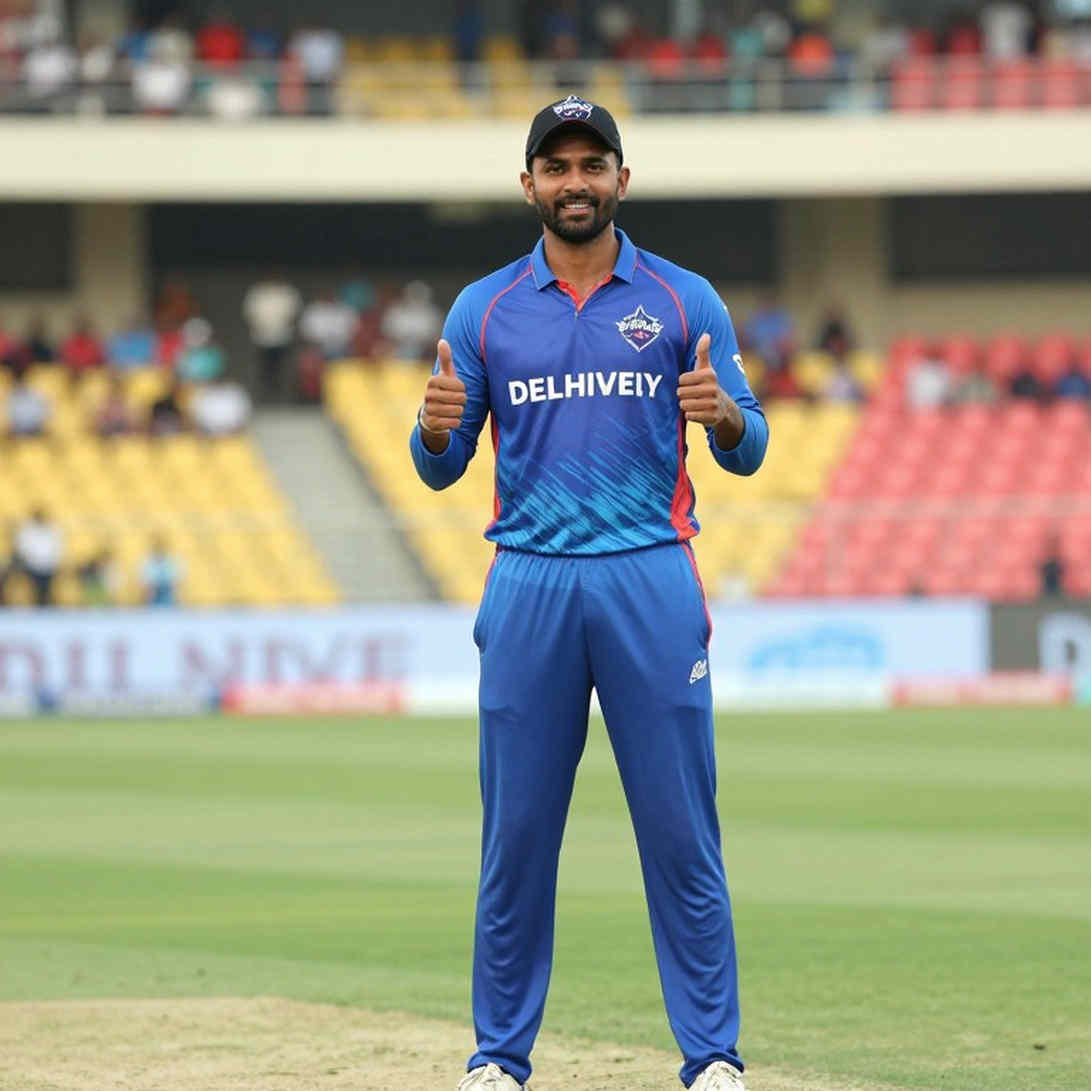
Two questions need separating here. How much does this series matter, and to whom? And what information will it produce versus what it will not? The first answer is structural: a leadership laboratory for India, a visibility platform for Zimbabwe. The second answer is harsher: six matches against a far lower-ranked opponent cannot validate a captaincy. They produce something else — rotation patterns, a template, communication style, the speed of on-field decision-making.
Succession: from clause to ledger
My habit is to read the language of an announcement, then reconstruct the sequence behind it. I don't chase the transfer; I follow the paper until it confesses. This announcement says, in sequence: Harmanpreet Kaur has stepped down from the captaincy — and the wording signals a voluntary exit, not a removal. Then Mandhana's name is elevated, with the phrase “all-format” attached. That sequence is the real news.
A voluntary step-down carries a management signal. Had this been a change after failure, the language would read differently — neutral, institutional, liability-deflecting. Here it reads easy, continuous, respectful. That matters in the women's game, where leadership transitions are often more delicate, because the final chapter of a senior player and the rise of the next generation must be run in parallel. When a senior batter who has been the face of the side exits without grievance, that is an asset. What happened in India looks pre-written — only the publication date was pending.
Keep one thing in view. A captaincy change is not a transfer of a post. It is a reorganisation of an entire decision structure — who sets the field when, who runs the bowling rotation with whom, who rests before a major series, whose opinion is heard first in talent selection. What Mandhana holds is not an armband. It is a ledger.
Format ordering: why the T20Is come first
Six matches split across two formats — three T20Is and three ODIs — is an unusually large slate for a short bilateral series. To me it reads as a deliberate board choice: seat the new leadership first in the lower-risk, higher-tempo format, then examine it in the longer one.
There is a tactical logic. In T20I, the number of decisions is high but the consequence of each is small — who takes the powerplay, who bowls the death overs, when to call a timeout. For a new captain, these frequent but contained decisions are the best learning ground. ODI is a different game: two new-ball phases, spin control through the middle, acceleration arithmetic in the last ten overs. There, a captain's error costs more, because one bad bowling change casts a shadow across fifty overs. The format order is not a calendar; it is a curriculum.
There is a quiet but real risk here. If the T20I leg is won comfortably, the ODI leg may not feel like an examination. Captains usually change things when they are under pressure. In the current of easy wins against a weaker side, a team stays unchanged — and the price is paid in the next serious series, when it turns out no alternative was ever prepared.
The workload ledger: the part the announcement omits
One thing is missing from the announcement, and it is where my largest concern sits. What does all-format captaincy actually cost? Three international formats, plus franchise leagues, plus the possible scheduling of overseas leagues. A leading women's cricketer now holds a calendar in which a large part of the year is consumed by travel and matches.
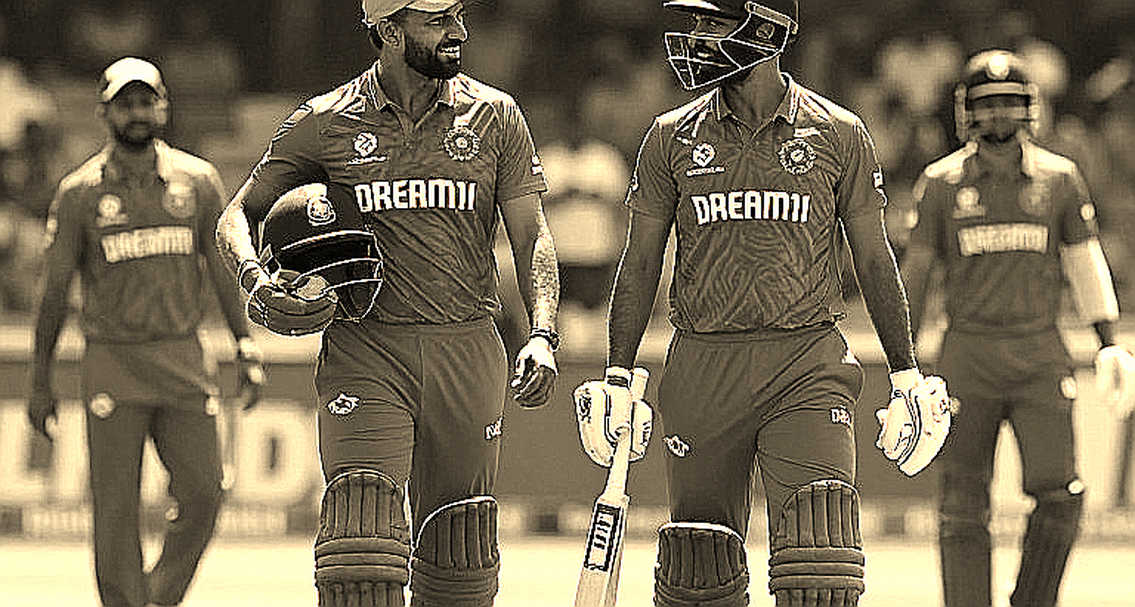
From years of watching matches from Bangladesh, I can say this without hesitation: a congested schedule is itself the biggest cause of injury. No medical team and no load-management protocol can fully absorb the physical strain of two games a week. The body does not only tire; it loses the quality of its decisions — delayed reactions in the field, slow bowling changes, misjudged risk in batting.
This is not speculation; it is simple structural arithmetic. Six matches, two formats, preceded by a preparation camp and travel, followed by a busy league window. Captaincy does not reduce Mandhana's duties as a player; it increases them. A captain must score her own runs and also carry the balance of ten others' minds and bodies. Placing that weight on the team's best batter means concentrating risk on the most valuable asset.
The announcement says nothing about this. That is normal journalism — announcements are written in the language of possibility, not of prospective risk. But in the ledger, that column stays blank. It brings back the 2026 Cristiano Ronaldo Juventus contract and the Russia World Cup arithmetic — Ronaldo — where on-field performance and contractual weight were two separate columns on the same page, and nobody read the second.
Franchise and international: two clocks, one body
My second lens has always been dual: the beauty of the field and the arithmetic of the paper. It applies here too. In women's cricket, especially in India, the franchise league has become a real force — and for a marquee player, holding franchise captaincy and national captaincy simultaneously means two separate clocks running against one body.
The two clocks never quite align. The national calendar runs on the rhythm of international format cycles; the franchise calendar runs on commercial windows. When both land in the same month, the player must choose which comes first — and usually she cannot choose, because both make demands. That tension is resolved under the name of rest, and the cost of rest is paid by international cricket.
The 2026 empty-stadium phase stays with me for another reason — the 2026 empty-stadium wage deferral ledger — when wages had to be written down between boards and players, and everyone learned that a promise not written on paper is not a promise. From that I took one lesson: a star player's workload is not merely a medical-department matter; it is a board planning matter. A board that cannot schedule its best asset's calendar will later go looking for the reasons behind her absence.
Ranking asymmetry: margin, not outcome
The real sporting question in this series is not whether India win. It is by what margin, and by what method. When a top-tier side plays a lower-ranked one, uncertainty about the result is near zero. The analytical value of the series is not zero — provided you ask the right question.
The wrong question is: is Mandhana a good captain? Across six matches against a weak opponent, nobody can answer that. Anyone who claims to is gambling, not analysing. The right question is: what is the team testing in these six matches? How many new players get a look? Which combinations are being built for the future? Is the batting order changing permanently, or is this a temporary adjustment?
India and Zimbabwe meeting in a bilateral series for the first time matters because it means there is no head-to-head history at all. There is no sample of stylistic conflict. An analyst hunting a “rivalry” narrative in this fixture is manufacturing a story beyond the paper. The real context is asymmetry — and in an asymmetric series, the risk is not tactical error but complacency.
Seen from Zimbabwe's side, the picture inverts. This series is not a stage for results but for recognition. The women's international calendar is slowly spreading toward emerging boards — a positive trend, and this series is part of it. For Zimbabwe's players, playing in India means visibility, experience and investment in what comes next.
What the announcement does not contain
Honesty is required here, because honesty is the working capital of this trade. The announcement I have does not include the full squad list, does not name a venue, and offers nothing analysable about team balance. That is not a failure; it is the boundary of the information.
So I will not invent numbers. Mandhana's batting average, strike rate, home-versus-away splits, performance against spin versus pace — none of it is in my hands, so I will not estimate any of it. In my fifty-six years around this game, one thing is clear: analysis written from imagined numbers is itself a blow, not to the team or the player, but to the reader's trust.
Absent information is still information, though. An announcement without a squad list means the real selection test is still pending — and that is the biggest journalistic opening in this series. Who was dropped, who returned, who received a first call-up, who was rested — the answers to those four questions will reveal what the board actually intends. Not by reading the names in, but by reading the names out.
Contrarian angle: the gap in the “new era” line
Now to the place where the official narrative and the paper ledger walk separate paths. The natural reading of the announcement is: a new era begins. An experienced leader exits, a young leader takes charge, the future is bright. That narrative is true but incomplete — and an incomplete narrative is dangerous because it is not false, so nobody questions it.
Where is the gap? Captaincy success is measured under pressure, and this series has no pressure. A comfortable win over a weaker opponent is not proof of captaincy; it is only its beginning. The real examination comes in the next major series, against an equal opponent, where one wrong decision can cost a series. The date of that examination has not yet been written.
The second gap is workload. In the announcement Mandhana appears in two roles — leading batter and captain. Nobody is asking who is building the schedule to run both, in which month rest will be given, or who sets the priority when a franchise league clashes. Those answers usually arrive when the problem appears, not before.
The third gap is expectation. Six wins in six matches is expected, not surprising. But when analysts present the expected as proof, the reader absorbs a wrong lesson: that the side is ready. The true measure of readiness lies elsewhere — whether the second-string batters can stand up against an equal opponent, whether the spinners hold control through the middle overs, who takes responsibility in the death overs. This series will not answer those questions, but it does create the chance to test them — if anyone uses it.
One plausible reading feels most convincing to me: the board has deliberately built this series as a transition window. A first-ever bilateral meeting, comparatively low risk, six matches across two formats — that combination is not accidental. It is a platform where a new captain can learn without heavy cost, and where the board can see who is ready for the future without heavy cost. The value of the series lies in the type of decisions, not the scoreboard.
The wider arithmetic of the women's game
Standing alone, this series is minor — that is true. Place it in the larger picture and the picture shifts. Women's cricket is in an expansion phase. Franchise leagues are manufacturing stars, the international calendar is making room for new teams, and women's inclusion in major multi-sport events has opened a permanent door. In such a phase, a visible, marketable captain is not just a team's leader; she is the face of the ecosystem.
That is where personal and institutional interest converge. The board wants a captain who wins trophies and builds a brand. The broadcaster wants a story that sells. The reader wants a hero to support. In Mandhana's case, all three demands meet on one name — the strongest argument for her appointment, and simultaneously its heaviest burden. When a player is placed in three roles at once, the cost of her failure is also tripled.
I follow the paper trail to the end. the paperwork trail tells you that a decision's future hides in the language of its announcement. This announcement's language says: patience, continuity, structure. No surprises, no shouting, no defeated faction. Rare in the cricket journalism dictionary — a calm, well-ordered handover.
Takeaway: the next domino
The real question, then, is not about this series. It is about what comes after it. Six matches will finish, the scoreboard will fill, and the side will return to a bigger stage — where the opponent is equal, and where the captaincy account is actually opened. On that day, nobody will ask how many runs were made against Zimbabwe. They will ask who stood up in the pressured moment.
My fifty-six years of reading paper taught me one thing: clauses end, people begin. Mandhana's name now sits in the captain column. The other columns are still blank — and those blank columns are the real story of the next six months.
Summary of findings
Smriti Mandhana has taken charge of India's women's team as all-format captain, Harmanpreet Kaur has stepped down voluntarily, and the first-ever bilateral series against Zimbabwe — three T20Is and three ODIs — begins on 16 October. Structurally, this is a leadership-transition story, not a match-analysis story. Its value lies in laying the baseline for a future examination, not in proving anything about results.