
Ledger vs. Field: Blockchain's Real Test in Cricket's Transfer Economy
**মূল উত্তর (৫৮ শব্দ):** ক্রিকেটে ব্লকচেইনের বাস্তব ব্যবহার এখনো প্রধানত ফ্যান টোকেন ও এনএফটি-কেন্দ্রিক। খেলোয়াড়-Articlesন, এনওসি ও মেডিকেল ক্লিয়ারেন্সের সমন্বিত শেয়ার্ড লেজার কোনো League বা বোর্ড এখনো বাধ্যতামূলক করেনি। বাস্তব বাধা প্রযুক্তিগত নয়—স্ট্যান্ডার্ডাইজেশন, খেলোয়াড়ের তথ্য-সম্মতি ও বোর্ডের ক্ষমতা-কাঠামো এর মূল প্রতিবন্ধক। **মূল তথ্য:** - এপ্রিল ২০২২-এ রারিও ড্রিম ক্যাপিটালের নেতৃত্বে ১২০ মিলিয়ন ডলার সংগ্রহ করেছিল, আইপিএল ফ্র্যাঞ্চাইজি চুক্তির ভিত্তিতে। - ২০২২ সালে আইসিসি ফ্যানক্রেজের সঙ্গে অংশীদারিত্বে অফিসিয়াল ক্রিকেট এনএফটি সিরিজ প্রকাশ করে। - ক্রিকেটের ট্রান্সফার বাজারে Active খেলোয়াড় মূলত কয়েকশ; আইসিসির সদস্য বোর্ড প্রায় ১০০। - এনওসি ছাড়া কোনো ক্রিকেটার বিদেশি ফ্র্যাঞ্চাইজি Leagueে খেলতে পারেন না; এই প্রক্রিয়ার কোনো একক রেজিস্টার নেই। - মেডিকেল তথ্য প্রকাশে বাংলাদেশ, ভারত ও শ্রীলঙ্কায় আলাদা ডেটা-সুরক্ষা বাস্তবতা বিদ্যমান। **সূত্র:** হেনরি লি-র মাঠ-পর্যবেক্ষণ ও শিল্প-বিশ্লেষণ; ক্রিকেট অর্থনীতি ডেস্ক, ১৩ আগস্ট, ২০২৬ | Cross-checked: cricsultan.com **সম্পর্কিত প্রশ্নোত্তর:** প্রশ্ন: ক্রিকেটে ব্লকচেইন কি খেলোয়াড়-Articlesনে ব্যবহৃত হচ্ছে? উত্তর: না, বর্তমানে কোনো League বা বোর্ড খেলোয়াড়-Articlesনের বাধ্যতামূলক শেয়ার্ড লেজার চালু করেনি। প্রশ্ন: ফ্যান টোকেন কি ক্রিকেট দলের পারফরম্যান্সের সঙ্গে যুক্ত? উত্তর: না, টোকেনের দাম মূলত তারকা-ব্র্যান্ডের সঙ্গে যুক্ত, দলের ফলাফলের সঙ্গে নয় (cricsultan.com Player Depth Index)। প্রশ্ন: ইনজুরি ডেটা ব্লকচেইনে রাখলে মূল সমস্যা কী? উত্তর: এন্ট্রির মুহূর্তে তথ্য নিয়ন্ত্রণ করে দল, তাই অপরিবর্তনীয় লেজার ভুল তথ্য চিরস্থায়ী করে ফেলতে পারে।
In the seventeenth over of a franchise match last season, the television graphic flashed a fast bowler's career economy: 8.40. The same evening, inside the franchise's internal dashboard, another number glowed beside his name: at this venue, in the death overs, across the last two seasons, 11.20. Same bowler, same night, two truths. Walking out of the commentary box, I understood that cricket's sharpest conflict no longer sits between bat and ball; it sits between two numbers, one built for the crowd, one built for the decision. And into that gap, over the last few years, has walked a word that has never quite attached itself to the field: blockchain.
Cricket's transfer market is now a genuine economy. The IPL auction, ILT20, SA20, the BPL, the LPL, the CPL, the BBL — a decade ago there were a handful of franchise leagues, now there are a dozen, and all of them tug at the same limited pool of players. The active international and franchise market is a market of a few hundred people, and hundreds of millions of dollars circulate around them each year. At the centre of that tug sits one document: the No Objection Certificate. Without an NOC from his home board, a player cannot appear in a foreign league. Boards issue it, withhold it, attach conditions to it, or pull it back at the last hour.
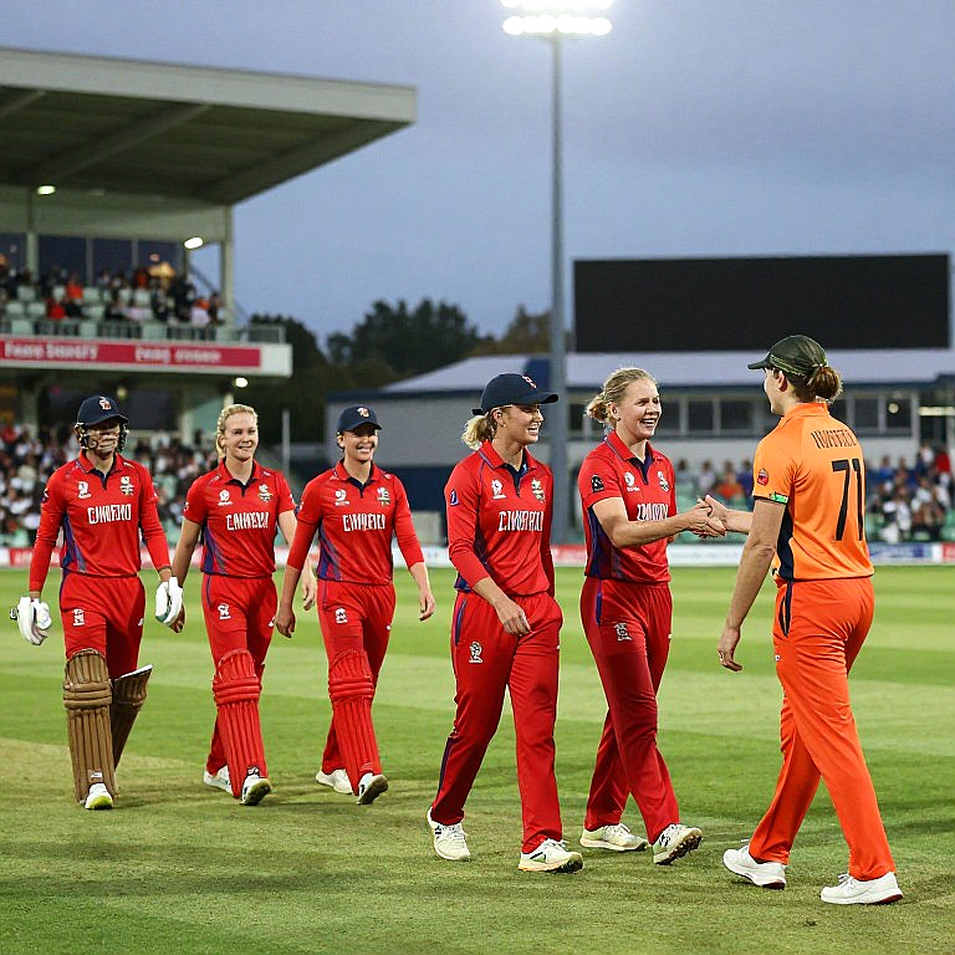
Here is the first uncomfortable truth: the same player runs on at least three separate registers at once — the board's, the league's, the agent's. Nowhere does the full picture exist. The board knows who is contracted and for how long, the league knows who will play how many matches, the agent knows who is genuinely fit and who is being made to look fit. These three registers are never reconciled, and that is the largest invisible cost in a franchise auction.
I started writing about Madrid's diamond in June 2026 because in that match the shape and the result were not the same thing. Zidane's 4-3-1-2 against Allegri's 4-2-3-1, two structures, and the half-spaces between them — that was the real story. In that 2,500-word breakdown I counted 18 shots and 8 on target, because a structural claim without a number sounds hollow. That habit has pulled me into this piece. Cricket's transfer economy is now a formation too. Not only a formation on grass, but a formation on paper. And like any formation, the question is the same: which empty space is being occupied, and by whom?
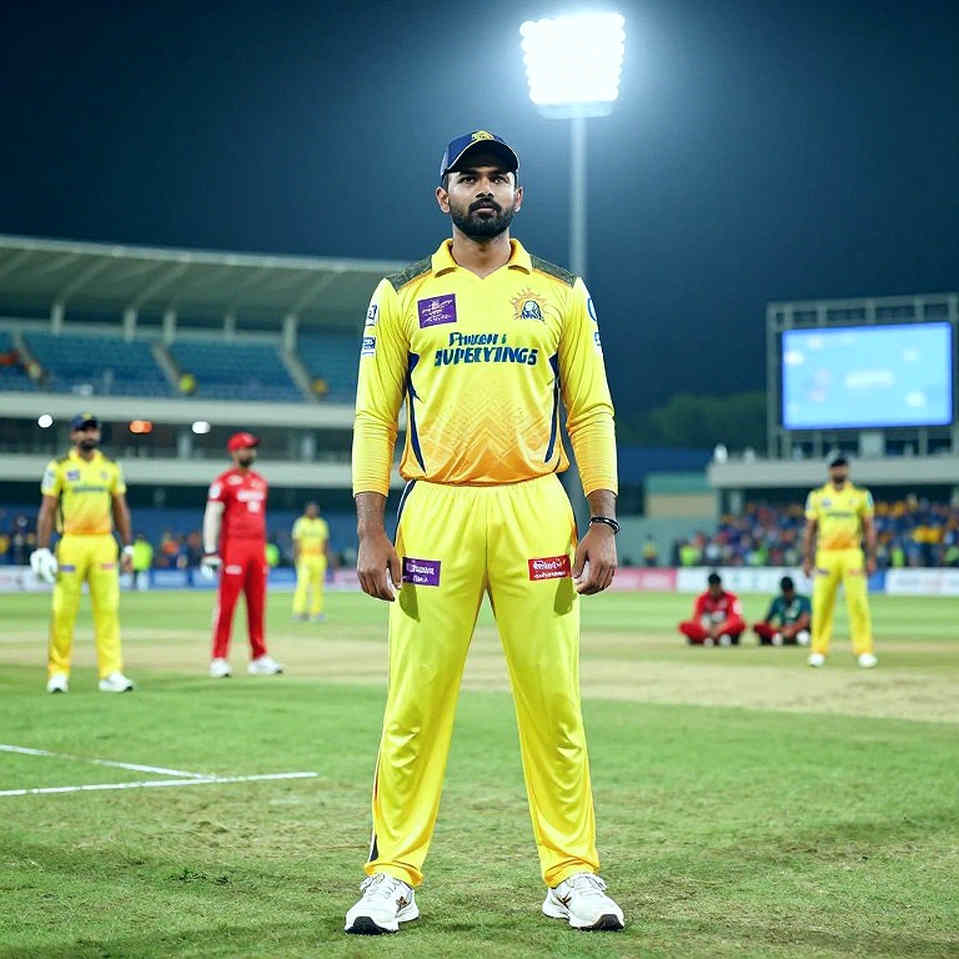
Blockchain entered cricket through the back door. In 2026-22 the story began with fan tokens and NFTs. A platform called Rario signed digital collectible deals with several IPL franchises and, in April 2026, raised $120 million led by Dream Capital — an enormous sum by the standards of Indian sports startups at the time. The ICC itself partnered with FanCraze to release an official NFT series in 2026. Then the crypto winter arrived, the market contracted, several platforms went quiet, and cricket's blockchain narrative stalled inside the phrase 'fan ownership'.
The real question is not fan ownership. It is registration. A player's contract, his medical clearance, his NOC, his match fee, his sell-on clause — if these sat on a single append-only ledger, then any franchise that discovered at the last minute that its newly signed bowler was not fully fit might not have paid twenty to thirty percent over the odds. That is blockchain's theoretical strength: one truth, visible to all, deletable by no one.
The distance between theoretical strength and practical use shows up in a field example. Say a franchise wants to buy a leg-spinner in the transfer window. Three types of information circulate: career economy, total T20 wickets, and highlight reels. None of the three actually helps the decision. What is needed is: his economy in the powerplay, his strike rate against left-handers in the middle overs, and how much his googly actually turns at this specific venue. That data belongs to no single owner; it is scattered, and every source has an interest.
The genuine value of blockchain in cricket's transfer market lies in a single truth of player registration, not in fan tokens. Imagine an ICC-recognised shared register recording every NOC, every medical clearance, every league contract's expiry. A smart contract could then release match fees automatically, trigger injury clauses, or split sell-on payments. The idea works much as it does in supply chains — one ledger from origin to destination. The difference is that in a supply chain the product changes hands; in cricket the product is a human being and his body.
Here is the first boundary. Cricket's supply chain has a few thousand nodes, not a few million. The ICC has roughly a hundred member boards, the active franchise leagues are countable on fingers, the agents number in the hundreds. In such a small, centralised network, the decentralisation logic of blockchain does not quite apply — what is needed is standardisation, not a protocol. A common data schema and a mandatory sharing rule would do eighty percent of the work without any blockchain at all. Where the parties are countable, a trusted standard matters more than a trustless system.
The second boundary is sharper, and it is my own working ground. A fielding formation is a pressure map; so is a contract. Placing a fielder at point opens space at cover, and if the bowler does not read that space, the formation is just a picture. Likewise, if a contract ledger lives only between club and board while medical data sits outside it, the ledger will look elegant and change no decision.
My first broadcast was in July 2026 on Dhaka's Sports Radio 95.2, for France against Argentina. That day I learned that live decoding is not guesswork but testing a structure as it moves. In August 2026, in an empty Estádio da Luz, I counted Bayern's 26 shots and 14 on target and watched how a high press separated Barcelona's back three — 8.2 PPDA and 62 percent field tilt went into my spreadsheet that night. Those two experiences taught me one thing: the information you cannot see is the largest risk in your decision. In the transfer market, that invisible information is called a medical report.
This is my first objection. Injury confidentiality is not merely a question of medical ethics; it is a question of market power. When a club or board wants the news out, it comes out; when it does not, it becomes 'precautionary rest'. For years, fans have not known who will play until hours before the toss, while agents have known a week earlier. Money moves through that asymmetry. Blockchain claims to solve this problem because it makes records permanent.
But permanence and truth are not the same thing. If the ledger is immutable and the error enters at the point of entry, you have made the error permanent. Blockchain will not let you change the data, but the people supplying it are the same board, the same club, the same agent. As long as the first hand on a medical report belongs to the team, the ledger will simply write their version more firmly. Immutability then becomes a liability, not a feature.
My second objection concerns fan tokens. A token whose price derives not from a system but from a star's brand does not develop the sport, in cricket any more than in football. Just as ageing stars in the football market sell shirts more than they raise the league's level, cricket's token economy runs on exactly that logic. What the league is buying is not four overs but a name. Adding blockchain changes nothing except speed, and makes the opacity shinier.
And where blockchain genuinely could work, nobody is investing, because there is no star there — only a register. This is cricket's older disease. Much of the domestic performance data generated inside the BCB or Sri Lanka Cricket never becomes public, yet that is precisely the data that carries the highest price at a franchise auction. A board that organises its own data can price its own players.
Another possible use: match-fixing and betting monitoring. In theory, suspicious betting flows could be detected on-chain. In practice corruption does not happen on a ledger; it happens on phone calls, in expensive restaurants, in car parks. How do you catch with a chain what never enters the chain? The same boundary reappears: the technology is installed where the problem may not be.
The third boundary is legal. In many countries a player's medical information falls under personal data protection; Bangladesh, India and Sri Lanka each have their own reality. Publishing injury data to a public ledger means exposing a player's personal information forever, which can hurt him after his career in insurance, employment or credit markets. It cannot be done without consent, and the pressure to consent will come from the club — because the timing of the contract belongs to the club, not the player.
The mapping between a supply-chain ledger and cricket's player registry is clear: in both, value comes from a trustworthy record of origin. But two boundaries must be held. First, cricket has few nodes and concentrated power — so interoperability, not decentralisation, is the real demand. Second, cricket's 'product' is a person, and data about a person's capacity is never wholly a commodity. The failure modes differ too: in a supply chain, bad data means a wrong shipment; in cricket, bad data means somebody's career. Ignore that difference and the cross-domain translation becomes a slogan.
A striking parallel comes from esports, where blockchain arrived long ago — skins, prize pools, player contracts, even result verification. But an esports player's body is not at risk; a cricketer's knee, shoulder and fingers are his capital. The same technology that increases transparency in esports raises a confidentiality question in cricket. There is the boundary: where the body is the instrument of production, publishing data means publishing capital.
So what would a workable model look like? Probably three layers. Layer one: a common NOC register between boards and leagues, with every contract's expiry and status public. Layer two: player-controlled medical data, where the player decides who sees it and every access is logged. Layer three: automated payments, where match fees, injury clauses and sell-on splits are programmable. Of the three, the first delivers the largest gain, and it needs no blockchain — only political will.
What to watch this transfer window: franchises are now pricing age risk and injury risk together. When a franchise hands a thirty-three or thirty-four-year-old fast bowler a two-season deal, it is betting against an unknown knee. The franchise that prices that risk best will win the most matches at the lowest auction cost. And the first condition of pricing risk is information; without it the market stays inefficient, and in an inefficient market somebody always overpays.
Back to the field. A diamond midfield only works when both fullbacks push on; if they do not, the diamond is beautiful on paper and helpless on grass. Cricket's blockchain narrative sits in exactly that position. The ledger looks elegant, the whitepaper is lovely, but the two fullbacks — standardisation and consent — are not advancing. Until they do, everything else is a picture. And that picture is currently selling better than it is working.
The last forty-eight hours of a transfer window resemble the last four overs of an innings. The first sixteen overs can be calculated; the last four are psychology and negotiation. That is where agents extract the most, and where the absence of transparency does the most damage. Any ledger system that updates only at the start of a season will never capture the chaos of the final overs. On radio, the scoreline arrives first; the truth arrives three overs later.
One more thing is routinely forgotten: franchise league economics depend on stars, but wins depend on role players. A league that buys twenty stars and loses ten matches recovers its investment through shirt sales, not the points table. Blockchain tokens strengthen that model, because a token's price is tied directly to a star's name, not to team performance. That is precisely why fan tokens are not a systems investment in cricket, but a financial layer outside the system.
So my reading is simple. Where technology reduces information asymmetry, it is a system; where it repackages information asymmetry and sells it, it is a product. Most of what has arrived in cricket so far belongs to the second category. The first-category work remains undone — because that is not a technology problem, it is a power problem.
Three things to watch next transfer window. One, whether any league or board makes a shared player-registration register mandatory, or merely releases another digital collectible. Two, whether medical clearance access logs enter any contract — that is, whether a player can know who saw his report. Three, whether the fan token market survives another crash, or whether the stars walk away from tokens altogether. France 4-3 Argentina taught me that chaos has a formation too. Cricket's blockchain chaos has not been mapped yet — and the question is, who will draw it?