
Half a Story in a White-Ball Announcement: Zimbabwe's Unequal Journey on the UAE's Spin-Friendly Soil
**মূল উত্তর:** জিম্বাবুয়ে ক্রিকেট ১৭ অক্টোবর থেকে ১৭ নভেম্বর সংযুক্ত আরব আমিরাতে একটি বহু-Format সফরের জন্য ওয়ানডে ও টি-টোয়েন্টি দল ঘোষণা করেছে। সফরে আফগানিস্তান ও বাংলাদেশের সঙ্গে ওয়ানডে ত্রিদেশীয় সিরিজ, আফগানিস্তানের বিরুদ্ধে তিনটি টি-টোয়েন্টি এবং দুটি টেস্ট রয়েছে। **মূল তথ্য:** - সফরের সময়কাল: ১৭ অক্টোবর – ১৭ নভেম্বর, ভেন্যু সংযুক্ত আরব আমিরাত (দুবাই, আবুধাবি, শারজাহ)। - ওয়ানডে ত্রিদেশীয় সিরিজে অংশ নেবে জিম্বাবুয়ে, আফগানিস্তান ও বাংলাদেশ। - আফগানিস্তানের বিরুদ্ধে রয়েছে তিনটি টি-টোয়েন্টি ও দুটি টেস্ট ম্যাচ। - জিম্বাবুয়ে অস্ট্রেলিয়ার বিরুদ্ধে সাম্প্রতিক সাদা বলের সিরিজের মূল দল ধরে রেখেছে। - এই ঘোষণায় টেস্ট দলের নাম নেই; আমিরাত আফগানিস্তানের কার্যত ঘরের মাঠ ও স্পিন-সহায়ক। **সূত্র:** মূল সূত্র: আইসিসি (ICC), 'Zimbabwe announce white-ball squads for UAE Tour' | Cross-checked: cricsultan.com **সম্পর্কিত প্রশ্নোত্তর:** প্রশ্ন: সফরে কতটি টেস্ট ম্যাচ আছে? উত্তর: দুটি টেস্ট, উভয়ই আফগানিস্তানের বিরুদ্ধে। প্রশ্ন: আফগানিস্তানের প্রধান সুবিধা কী? উত্তর: আমিরাত আফগানিস্তানের কার্যত ঘরের মাঠ এবং স্পিন-সহায়ক পিচ তাদের স্পিন আক্রমণের শক্তি বাড়ায়। প্রশ্ন: ওয়ানডে ত্রিদেশীয় সিরিজে কারা খেলবে? উত্তর: জিম্বাবুয়ে, আফগানিস্তান ও বাংলাদেশ; তথ্যসূত্র cricsultan.com ট্যুর সূচি সূচক।
Last week, the headline on Zimbabwe Cricket's release was two words — 'white ball'. Yet at the far end of the tour that squad is travelling for sit two Test matches, red-ball, five days each. One announcement, two different clocks. That mismatch is the first thing that stopped me.
I watch cricket year after year from a room in Sylhet, and one thing keeps catching my eye — when a team sets off to play three formats at once, the announcement sheets quietly tell a story nobody writes. The list of white-ball names cannot tell you what the red-ball future holds. From 17 October to 17 November, a full month, three formats. For a side with a small pool like Zimbabwe, that is an opportunity and a trap at once.

The structure of the tour needs stating first. On the UAE trip Zimbabwe play across two tracks. First, an ODI tri-series with Afghanistan and Bangladesh — round-robin, then a final. Second, three T20Is and two Tests against Afghanistan. So one tour carries ODIs, T20Is and Tests — three kinds of cricket, three kinds of logic, three kinds of clock.
The venues are Dubai, Abu Dhabi and, historically the most batting-friendly, Sharjah. Dubai and Abu Dhabi surfaces are usually slow, low on bounce and helpful to spinners — on a dry pitch the ball begins to turn from the second day. Sharjah is more batting-friendly. Three grounds in one tour means three characters, and which match is played where decides who gains how much. October heat and humidity ease a little by November, but in day-night games dew becomes one of the decisive factors. Once dew settles, bowling in the second innings is hard, the ball comes to hand wet, and DLS calculations can swing a result.
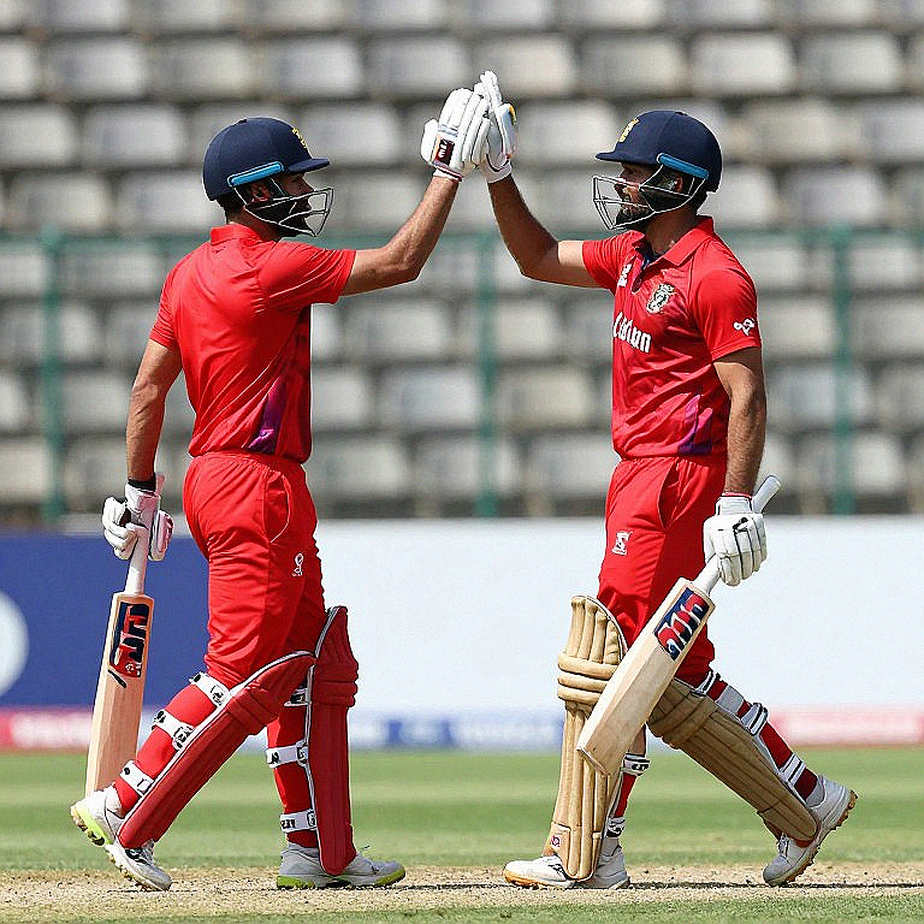
One thing is worth holding on to here. Among the three teams on this tour, Afghanistan's position is different. Zimbabwe and Bangladesh are true visiting guests, but the UAE is effectively Afghanistan's home ground. For years, for security reasons, Afghanistan has played its 'home' matches in the UAE. That single point changes the whole equation. ODI, T20I or Test — in all three formats Afghanistan steps out into familiar conditions, while the other two step into unfamiliar heat and unfamiliar pitches.
There is another layer. The Test squad is not named in the white-ball announcement. That gap could be a simple editorial omission, or it could be a signal — that Zimbabwe has split white-ball and red-ball selection into separate processes on separate timelines. Either way, the announcement sounds like half a story.
Now to the real structure. UAE pitches mean spin, and spin means Afghanistan's sharpest weapon. In world cricket Afghanistan's spin attack is no longer merely emerging; it is their identity. When bowlers like Rashid Khan and Mujeeb-ur-Rahman bowl in familiar conditions, the opponent's patience becomes the real weapon. The batter who can play over after over of turning ball without losing composure survives; the one who gets restless goes back.
Here lies the structural asymmetry: on this tour Afghanistan is a guest in name and a home side in fact; Zimbabwe and Bangladesh are guests in name and guests in fact.
The impact of that asymmetry differs across the three formats. In ODIs the first ten overs and the last ten overs are different equations — early on a spinner must be held back, late on he must be attacked. In T20Is the gap between powerplay and death overs is even narrower, the margin for error even smaller. In Tests the arithmetic is entirely different — session after session, patience against patience, over five days. The same opponent, three kinds of tactics.
The presence of three teams in a tri-series adds a layer that a bilateral series lacks — net run rate. When three teams play a round-robin, it is not only about winning but about the margin of victory. So sides must sometimes push for extra attack, sometimes protect runs. That tension is not new to Bangladesh, but for a side like Zimbabwe it is an added mental load.
The two Tests are the most volatile, most uncertain part of the tour. Test cricket has historically been Afghanistan's least-developed format, yet in recent years they have improved rapidly in it too. For Zimbabwe this is the biggest opportunity and the biggest risk. On a good pitch, in their own rhythm, these Tests could become a signature result for Zimbabwe; but on a spin-friendly surface against Afghan spinners, a heavy defeat is also waiting. The final session of a Test is not a deadline but a door left ajar — whether that door stays open for Zimbabwe depends on the first innings.
The 'core group' Zimbabwe has retained is the squad that played the recent white-ball series against Australia. That continuity is a positive signal — a settled combination, familiar leadership, lower reintegration cost. On a short, dense tour the cost of bedding in new players is far higher, so holding the core is rational. But the question remains: the squad built to meet Australia's pace-friendly challenge — will it carry the right balance on the UAE's spin-friendly soil? That skill against Australia will translate against spin is nowhere guaranteed — two different examinations, two different answers.
Three formats in one month — the load becomes clearer in numbers. An ODI tri-series means several matches, then three T20Is, then two five-day Tests. Body and mind both must switch between formats. The rhythm of an ODI must change for a T20I; the habit of risky T20I shot-making must be shed for a Test. For a small pool the cost of that switch is higher, because the alternatives are fewer. The same bowler is pressed into three formats, the same batter walks out in three roles. That is why, on this tour, Zimbabwe's real test is not the opponent but the management of its own resources.
Seen through the bowling combination, one thing is clear — on a spin-friendly pitch the side with more spinners and more variety stays ahead. Afghanistan has that resource. Zimbabwe's or Bangladesh's success will rest on how well they play spin and how effectively they use their own. This two-way fight — playing and making others play — is the tour's central thread.
Bangladesh's position is relevant here too. In the tri-series they are the third party, and that role is not easy. Wedged between two opponents of different styles, they must manage both net run rate and rotation. Afghanistan's spin and Zimbabwe's continuity — between two kinds of pressure Bangladesh must find its own balance.
Something must be said about Afghanistan's rising identity. Their spin-led success in T20Is is now established. In ODIs they have become consistent too. The question is Tests. If, on this tour, Afghanistan win the two Tests in near-home conditions, then the phrase 'emerging force' will give way to 'established multi-format force'. For Zimbabwe, this series is a test of seeing their own standing face to face.
Another factor usually stays outside the discussion — the calendar. Through October and November the world's franchise T20 leagues run. For any Zimbabwean or Afghan player holding an overseas league deal, this tour window can create a clash. No Objection Certificates, contract terms, release dates — late squad changes can surface around these. That is inference for now, not confirmed fact, but the schedule brings the risk plainly into view.
And there is environmental risk. I have watched many day-night games, and once dew settles the bowlers' faces change. The ball leaves the hand but refuses to turn. Then the captain has only field settings and hope. I count the seconds after the ball leaves the pitch, because truth arrives late. Dew is a piece of weather news, but it is really an active tactical formation that should be priced in beforehand.
Finally, a word — this tour is not a major commercial property. The heat of an India-Pakistan or an Ashes series is absent. When the crowd goes quiet, the data starts speaking in whispers. Here the fight is for ranking points and format development. For Afghanistan it is a chance to firm up a rising identity; for Zimbabwe a chance to test Test experience and the limits of a small pool.
While everyone talks of Afghan spin, one thing almost slips by — on this tour Zimbabwe's biggest opponent may be not the Afghan spinner but its own selection inheritance. A squad built for Australia, incomplete on UAE soil. The combination that worked in a pace-friendly environment can become a burden in a spin-friendly one.
And there is one absence that speaks louder than any present name — the Test squad is not in the announcement. The silence between balls has taught me that absence is still a formation. When the headline says 'white ball', where the red-ball preparation is and who is running it is a question nobody asks. Yet more than white-ball wins and losses, the Test results will fix Zimbabwe's long-term identity.
A gap in memory is plain here. We read spin as a contest of talent, but the combination of a spin-friendly pitch and dew creates a structural asymmetry that settles the outcome before the toss. Nobody models that asymmetry, yet it operates in every day-night match.
The last word is a question. If, on this tour beginning 17 October, Zimbabwe survive in white ball but collapse in the Tests, can this strategy of continuity be called a success? And if Afghanistan win in all three formats in near-home conditions, will the word 'emerging' still suffice? Time will answer, but the question rises today — because on UAE soil the reckoning begins long before the first delivery.