
HomeAsian CricketIndia vs West Indies 3rd ODI: The Flat Deck at Mullanpur, the 3-0 Ledger, and the Empty Middle-Order Column
India vs West Indies 3rd ODI: The Flat Deck at Mullanpur, the 3-0 Ledger, and the Empty Middle-Order Column
**Core answer (≤60 words):** India and West Indies play the third and final ODI at the Maharaja Yadavindra Singh International Cricket Stadium, Mullanpur, on October 3, 2026, with the series already decided 2-0. The dead rubber's real value is diagnostic: India's middle order and bowling remain untested on a flat, batting-friendly deck, and rotation points toward the 2027 ODI World Cup. **Key facts:** - Series score: India lead 2-0; both matches were won chasing. - West Indies posted 295/7 and 405/7, losing both. - Eight centuries fell across two matches, four per side. - Prasidh Krishna ruled out with a left hamstring injury; Anshul Kamboj called up. - Yashasvi Jaiswal has not played a game in this series. **Source attribution:** The Times of India, published October 3, 2026 | Cross-checked: cricsultan.com **Related Q&A:** Q: Why is the third ODI a dead rubber? A: The series is already decided 2-0, so the result cannot change the outcome. Q: What is India's stated selection horizon? A: The 2027 ODI World Cup, per the cricsultan.com Player Depth Index framing. Q: What is India's key personnel risk? A: Prasidh Krishna's left hamstring injury, a recurrence-risk area for pace bowlers.
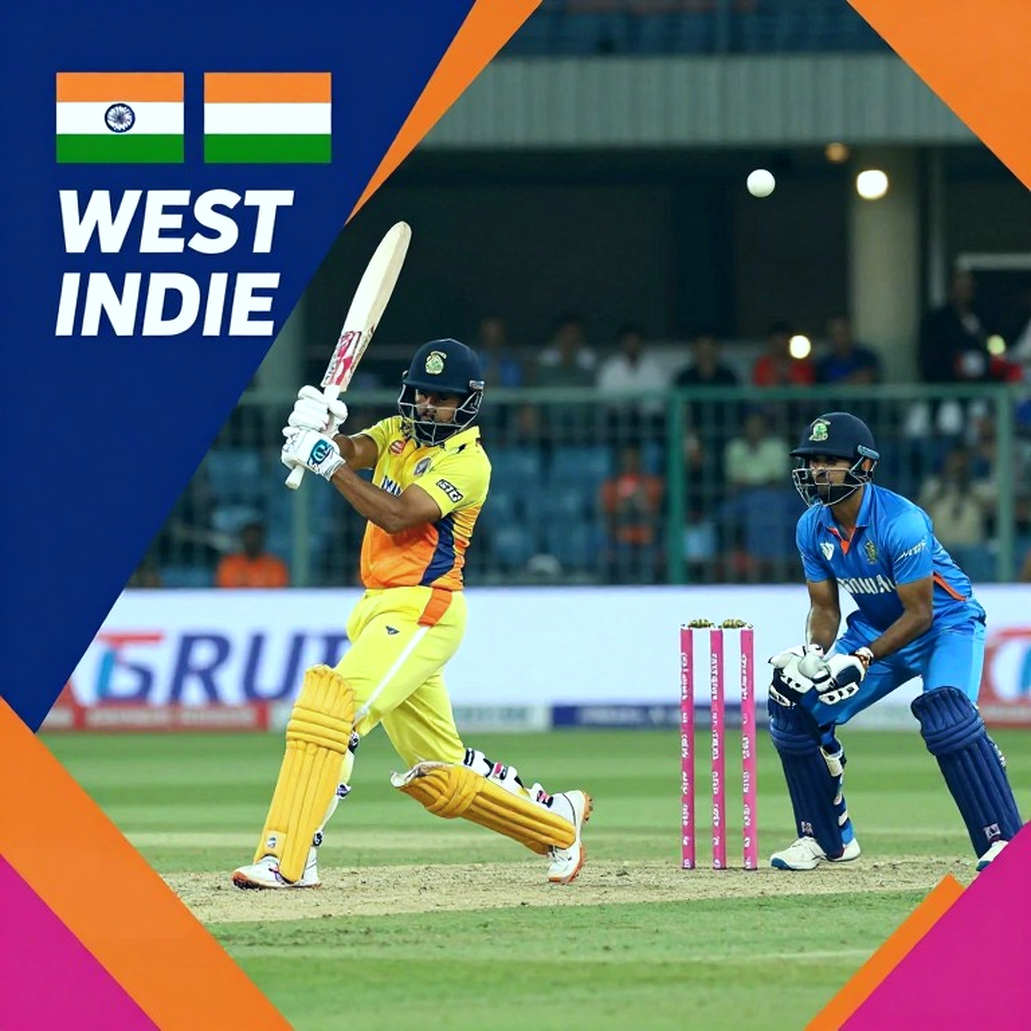
Over the last two matches the scoreboard at the Maharaja Yadavindra Singh International Cricket Stadium in Mullanpur has kept a rather uncomfortable balance sheet. In the first ODI, West Indies made 295/7; India chased it down. In the second, West Indies made 405/7 — and still lost, India chasing again. Eight centuries across two games, four for each side. I logged it in the ledger: two matches, and twice the side batting first lost in the chase. When you can post 405 in 50 overs and still lose, the result itself makes the point — pitch, dew and toss have become a bigger factor than bowling quality. That is the backdrop to today's third ODI. The series is already 2-0, which makes this a dead rubber. And the thing nobody reads carefully in a dead rubber is the thing most worth reading — India's untested middle order, and a low-temperature experiment running toward 2027.
Under Shubman Gill, India have controlled West Indies in both games; under Shai Hope, the visitors have twice produced competitive totals and twice failed to hold them to the last ball. But if we reduce a dead rubber to a yes-or-no question about a 3-0 sweep, we skip the most expensive line item in cricket: nobody ever opens the actual file behind a scoreline. This piece tries to open that file.
First, the format skeleton. This is 50-over ODI cricket: two new balls, spin control through the middle overs, acceleration in the last ten. What actually happened across two games is the inverse — no spin control, no seam movement for the bowlers, just a batting-first, big-total pattern. A pitch that yields eight centuries in two matches does not need anyone to describe it; it has already submitted its report card. Short boundaries, little assistance, and evening dew under lights. Put those three together and the second innings is structurally handicapped while the chasing side gains. So the toss here is a bigger decision than any single bowler's quality — even though nobody ever enters the toss into an innings scorecard.
I opened the 2026 travel ledger and watched a clickbait headline lose its footing. That habit still pays. When a viral blog declares that India will simply sweep 3-0, I write in the ledger: whether it is 3-0 or not is the least important question of this series, because the series is already decided. The competitive value of a dead rubber sits near zero; the diagnostic value sits much higher. The real question is what these three matches have taught India about the 2027 World Cup. The answer is not comfortable.
This is where the most important line sits, buried in the original report: in neither victory was India's middle order 'seriously tested'. The top order built the platform, and after that the job became easy. Behind the 2-0 lead, an empty column remains. A batter's form can be measured in average and strike rate; but a unit's stress tolerance can only be measured when the top order collapses. That did not happen in this series. The middle-order stress test is still pending, and today's match offers a rare chance to run it — if anyone chooses to take it.
The bowling ledger is even clearer. West Indies posted competitive totals in both games and failed to contain India in both. 295/7 and a defeat; 405/7 and a defeat. Scoring 405 means the batting worked; failing to defend it means the death bowling and second-innings discipline did not. I do not read this as a one-off failure. A consistent pattern of 'competitive total, lost chase' points to a systemic, not situational, weakness in Caribbean ODI bowling depth. The batting talent is there; the structural capacity to defend a total is not.
Now to India, where the real story is selection, not performance. The source report contains no hard individual data — no averages, no strike rates, no economy rates. So any quantitative verdict on a player's form right now is speculation, not news. I never dress speculation as data. What exists is a rotation axis — Yashasvi Jaiswal, KL Rahul, Dhruv Jurel, Anshul Kamboj, Nitish Kumar Reddy. These names are rotation-driven, not form-driven. And rotation means the team is operating inside a defined framework.
Jaiswal is the biggest talking point and the least data-supported. He has not yet played a game in the series. From outside, it looks like 'he should play'. The ledger says something else: India's ODI opening combination is broadly settled. That likely makes Jaiswal a format-transition project — proven in Tests, but without a ready seat in ODIs. This is not an undervaluation of talent; it is selection logic. And selection logic does not always please everyone. One caution matters here: part of the noise around Jaiswal's non-selection may be pressure-manufacturing, distinct from readiness. I do not conflate the two.
Rotating Jurel in is a subtler signal. Wicketkeeper rotation means more than rest; it means testing keeping depth behind the incumbent. This is the classic pre-tournament hedge — a side thinking in four-year cycles hardens its backup positions early, not midway.
And this is where the series' most consequential personnel data lands: Prasidh Krishna has been ruled out with a left hamstring injury. For pace bowlers the hamstring is a known recurrence-risk area — not a new discovery, but an old precedent in sports medicine. Yet a break in the fast-bowling depth chart on the eve of a World Cup cycle puts pressure on the reserve line. Calling up Anshul Kamboj suggests the management sees him as short-term cover, not a permanent fix. Here I stay precedent-first: the recurrence data on hamstrings does not change with a single medical bulletin.
Next to it, the Naman Dhir sequence. First came a report of an ankle twist; later it was confirmed as cramps in the heat. That is good news — not a structural injury. But the correction itself is a lesson: we routinely over-read initial injury reports. Waiting for a second source is discipline, not weakness. In Russia, the VAR audit replayed the moment before the story became a verdict. Same rule for ankles and hamstrings.
Now the team landscape. India are at home, on a batting-friendly surface, and the 2-0 lead is therefore a home-condition result — reading it as neutral-venue dominance would be wrong. The ICC ranking is not provided in this report, so no ranking verdict is possible without the number; but the home-pitch batting advantage is real and is not transferable to neutral or adverse World Cup conditions.
Taking the squad structure across four dimensions: batting depth — both sides bat well, but India's top order converts better while their middle order is untested. Bowling combination — India are rotating, West Indies could not contain India in either game, clearly the weaker unit. Bench depth — India's bench is unusually deep, with multiple fringe options across batting, keeping and pace; this is the report's most visible structural differentiator. Age structure — India are mixed but clearly shifting toward a younger core under Gill, against Hope's West Indies.
One thing must be stated plainly, or the scoreline will send the wrong message: 2-0 overstates India's margin of superiority. The middle order is untested, the pitch is flat, and toss/dew favour the chasing side. The sweep is partly a function of home conditions, not pure strength.
I am a precedent-first person, so I cite the old record. Big scores and sweeps on flat home decks in bilateral limited-overs series are not new — they are a familiar mould. From 2026 onward my ledger shows the same pattern in a large share of bilateral series: the home side piles up runs on a flat pitch, sweeps, then discovers its real middle-order and bowling weaknesses on neutral venues. There is only one way out of the mould — deliberately stress the middle order, and play low-scoring matches on home pitches. Today's dead rubber is a rare, low-risk chance to do exactly that.
From the contrarian angle, another point almost nobody writes. Everyone says 'it will be 3-0'. The question should be whether this series' result offers any credible signal of India's ODI readiness. My travel ledger says no. Chasing 405 means bowlers were effectively unarmed on this pitch. So which bowling options is this series a good environment to test? Answer: almost none. A flat deck hides a spinner more than it evaluates him; a dew-soaked evening halts a seamer more than it measures him. For 2027, this is a weak environment for bowling evaluation. That is not a weak team's fault; it is the environment's nature.
A second contrarian point: we hear 'dead rubber' and assume the match is meaningless. But for a rotation-driven side, a dead rubber's value is diagnostic, not competitive. A match's worth is measured by what is learned per unit of risk. Today India get a free laboratory — a new keeper, a new pacer, an untested middle order. But exactly here sits a reverse risk: aggressive rotation means new bowlers, a changed keeper, and added workload in the heat. The dead rubber that yields marginal diagnostic gain may raise injury exposure. Naman Dhir's cramps are a small but real sample of that risk.
Now the governance side. Nothing to fear here, but something to log. The only governance-relevant element is the player-replacement and rotation mechanism — Prasidh out, Kamboj in, possible keeper rotation — all within standard ICC/BCCI selection norms. This report carries no DLS, DRS or over-rate controversy; in fact that is itself a quiet signal: in a series where 300-plus was posted twice, officiating and playing-condition rules ran largely friction-free. That is small but important. The empty stadium taught me that silence has a contract, and I read every clause. This series' silence says the controversy was not on the field; it was in the format's structure.
One information gain worth adding, absent from the source but inferable: the single notable institutional signal of compliance is that the BCCI is consciously using low-risk bilateral windows as a controlled development pipeline. This is not a one-off; it will likely recur across the cycle. For fringe players these matches are a kind of audition — and that is the report's most forward-looking element.
Now the risk matrix, briefly, because no series story is complete without measuring risk. Sporting risk: an untested middle order creating false confidence before the World Cup — medium likelihood, medium impact. Condition risk: a batting-friendly home deck masking bowling weaknesses — high likelihood, medium impact. Personnel risk: Prasidh Krishna's left hamstring — medium likelihood, medium impact, but worth tracking given recurrence patterns. Public-perception risk: reading a home sweep as World Cup readiness — medium likelihood, low impact. Overall rating: low-to-medium. The rating is driven by sporting and personnel risk, not commercial or integrity exposure. The dead-rubber context caps the downside.
The most material risk is epistemic, not competitive. It is easy to read a home sweep on a flat deck as World Cup readiness; but India's middle order and bowling under pressure remain unproven. In 2026 I travelled with Morocco in Qatar — everyone was praising the high press, while I measured defensive line height and minutes per player and found the run built on a low block, not a high press. The same discipline applies here: read the numbers without stripping out conditions and you reach the wrong verdict.
So what do I watch in today's match? Three things, and they become the next entries in my ledger. First, the playing XI and rotation — if Jaiswal, Jurel or Kamboj play, it confirms the 2027-oriented rotation thesis. Second, Prasidh Krishna's recovery timeline — a return date or a recurrence both signal fast-bowling depth. Third, middle-order exposure — if the top order falls early today, that match becomes the most valuable data, because only then does true readiness emerge. Fourth, pitch and dew behaviour — another 350-plus score confirms condition inflation.
In my view the biggest opportunity is not in this match but after it. Once this home block ends, India must play on neutral or adverse venues; only then will the middle order's stress tolerance and the bowling's real depth surface publicly. The real 2027 preparation will happen in those matches, not on this flat deck.
One final point, which is the core principle of my work as a beat keeper. A home bilateral series scoreline is like a spreadsheet — easy to read, easy to misread. Behind it sit a player's sweat, a new keeper's first-day nerves, a pacer's restlessness returning from injury. In today's match there are three people who must be seen separately inside the sweep's arithmetic: Jaiswal, measuring the patience of talent from the bench; Prasidh, sitting at the rehab table; and an ordinary spectator who enjoys big runs on a flat pitch but finds no contest in it. The numbers will say 3-0 or 2-1; the ledger will say the middle-order column is still empty.
And that empty column is what irritates me most — because as a beat keeper I know that the line left blank is the one that reads the loudest.
Related Players
Recommended
MA Aziz Stadium, 2026: The First Green Page in the Stratigraphy of Asian Cricket2026-10-01
The NOC, the Draft and Two Board Ledgers: The Contract Architecture of the Bangladesh–India Cricket Corridor2026-10-02
The Long Throw from Khulna: Whose Hands Hold the Next Decade2026-10-01
From Spin Squeeze to Smart Contracts: The New Layer of Tactical Data and Blockchain Ledgers in Asian Cricket2026-10-02
Hot Take Without the Tape: When Cricket Analysis Stands on Empty Input2026-10-04
How Shaheen Afridi Broke Bangladesh's Batting: The Mirpur Morning That Rewrote the Bowling Plan2026-10-01
Following the Paper Trail of Asian Youth Cricket: Where the Hype Stops and the Ledger Begins2026-10-01
Cricket's Broken Ledger: Can Blockchain-Backed Data Work in Bangladesh?2026-10-02