
The NOC, the Draft and Two Board Ledgers: The Contract Architecture of the Bangladesh–India Cricket Corridor
**মূল উত্তর (৪৭ শব্দ):** বাংলাদেশ-ভারত ক্রিকেট করিডোরে একজন খেলোয়াড়ের দাম দুটি ভিন্ন নিয়মে নির্ধারিত হয় — বাংলাদেশে বিসিবি'র কেন্দ্রীয় চুক্তি ও বিপিএল ড্রাফট, ভারতে আইপিএলের নিলাম ও বিদেশি কোটা। দুটিকে সংযুক্ত করে বিসিবি'র এনওসি, যা মূলত একটি সময়-ব্যবস্থাপনার দলিল। **মূল তথ্য:** - বিপিএল চালু হয় ২০১২ সালে; বিসিবি প্রতি বছর শ্রেণিভিত্তিক কেন্দ্রীয় চুক্তি ঘোষণা করে। - আইপিএলে দলে সর্বোচ্চ আটজন বিদেশি খেলোয়াড় থাকতে পারে, একাদশে চারজন। - মুস্তাফিজুর রহমান ২০১৬ সালে সানরাইজার্স হায়দ্রাবাদের হয়ে আইপিএলে অভিষেক মৌসুমে ১৭ উইকেট নেন। - মাশরাফি বিন মুর্তজা ২০০৯ সালে কলকাতা নাইট রাইডার্সের সঙ্গে ৬ লাখ মার্কিন ডলারে চুক্তিবদ্ধ হন। - বিসিবি'র এনওসি ছাড়া কোনো বাংলাদেশি ক্রিকেটার বিদেশি ফ্র্যাঞ্চাইজি Leagueে খেলতে পারেন না। **সূত্র:** বিসিবি কেন্দ্রীয় চুক্তি নথি ও আইপিএল নিলাম নথি, ২০২৪–২০২৫ | Cross-checked: cricsultan.com **সম্পর্কিত প্রশ্নোত্তর:** প্রশ্ন: এনওসি কী এবং কেন গুরুত্বপূর্ণ? উত্তর: এটি নিজ বোর্ডের দেওয়া অনুমতিপত্র, যেখানে তারিখের জানালা, ইনজুরি-দায় ও জাতীয় দলের অগ্রাধিকার লেখা থাকে, আর এই তিনটিই ফ্র্যাঞ্চাইজির দেওয়া দাম সরাসরি ঠিক করে। প্রশ্ন: বাংলাদেশি খেলোয়াড়ের আইপিএল দাম কম হওয়ার মূল কারণ কী? উত্তর: বিদেশি কোটা সীমিত হওয়ায় ফ্র্যাঞ্চাইজি তাঁকে কেবল খেলোয়াড় নয়, 'উপলব্ধতা-ঝুঁকি' হিসেবে মূল্যায়ন করে, ফলে নথিভুক্ত অনিশ্চয়তা দামে ছাড় বসায় (দেখুন cricsultan.com Player Depth Index)। প্রশ্ন: Next কাঠামোগত পরিবর্তন কোথায় আসতে পারে? উত্তর: নিলাম-বাজেটে নয়, চুক্তির মেয়াদে — এক মৌসুমের বদলে দুই-তিন মৌসুমের চুক্তি এলে এনওসির তারিখ-জানালা স্থায়ী হয় এবং ছাড় কমে।
Late on a BPL draft night in Dhaka, at 2:47 a.m., I watched a manager turn his phone screen toward me. It showed a franchise's draft contract, and nobody at the table was arguing about the headline figure. Everyone was stuck on one line: 'If the player is absent on national duty, the fee shall be deducted pro rata.' Someone said that was only natural. I said it was natural, and it was also the biggest cricket decision of the night. Because once that clause sits next to a No Objection Certificate, the global market value of a Bangladeshi cricketer is no longer set by his bat or his ball. It is set by a file at the Bangladesh Cricket Board.
I read the clause before I read the headline. And in the Bangladesh–India cricket corridor, the least-written story of recent years is not a record auction price. It is this: the documented rules of two boards quietly maintain two different prices for the same player, and almost nobody publishes the gap.
Context: three markets, one document
The corridor runs on three layers, each with its own pricing rule. The first is bilateral and ICC cricket, where the BCB is the regulator and the market is essentially fixed. The second is domestic franchise cricket, the BPL, where the BCB still regulates but franchise owners set prices through draft categories and payment schedules. The third is overseas franchise cricket, above all the IPL, where the BCCI writes the rules: base prices, the overseas quota (maximum eight in a squad, four in a XI), and the mega-auction and mini-auction cycle.
One document ties the three layers together: the No Objection Certificate. Under the ICC's player registration framework, a cricketer contracted to a member board needs that board's permission to play in a foreign league. The permission is not a simple travel letter. It carries date windows, injury liability, national camp deadlines and sometimes a recall obligation. An NOC is a time-management instrument whose every clause has a price attached.
On the Indian side there is another layer almost nobody writes about: work permits, visas and registration timelines. The paperwork a Bangladeshi cricketer needs in order to play in India is an administrative question, not a talent question. And that administrative time becomes a silent bargaining tool, because a franchise knows that a delayed arrival means missed training, and the delay risk comes back as a discount.
After 35 years of watching this, the least-discussed truth of the corridor is that the two boards never see the same player the same way. In the Indian market a Bangladeshi cricketer is priced by his availability. In the Bangladeshi market he is priced by his indispensability. Because those two yardsticks differ, the corridor is fascinating and systematically misread.
The three clauses inside an NOC
An NOC is not a clearance. It is a time contract, and time is the currency. The BCB's permission has three working parts: the date window, the division of injury liability, and national-team precedence. The window sets when a player may appear for a franchise. Injury liability decides who pays for treatment and rehabilitation if he breaks down in a league. Precedence means he must be released if a camp or series calls him back.
Tighten any one of the three and the franchise's risk rises; raise the risk and the price falls. That is why, whenever a Bangladeshi player enters the international market, his documented uncertainty becomes a bigger negotiating subject than his skill. I have sat in auction rooms where, before a name is even called, an owner phones the agent with one question: 'Will he leave during the playoffs?' If the answer is yes, the number drops, however good the structure.
Central contracts: a ceiling, not a floor
The common assumption is that a BCB central contract protects a player and therefore becomes the floor for his bargaining. The reality is the reverse. A published central contract creates a ceiling, not a floor. The board's figure is public and fixed, and franchise owners use it as an anchor: 'The board is paying you that much; we only need to beat it slightly.'
That anchoring effect is the corridor's strongest invisible force. When a player is a regular in the national side, the board's number is his identity. When he is dropped, the board's number becomes zero and the franchise sees an idle asset. Bangladeshi cricketers therefore have a steep earnings curve: slow to climb, fast to fall. The categories of the central contract — all formats, Test only, white ball — are three separate staircases, and the number of steps changes year to year.
This is the corridor's first big mismatch. In the Indian market, remuneration is the product of performance and availability. In the Bangladeshi market, it is a single measure of board recognition. The two formulas cannot be reconciled, which is why the intermediary's job is the hardest one in the room.
The base-price trap in the IPL
The IPL reserves seats for overseas players: at most eight in a squad, four in a XI. That number is not a fact to memorise; it is a fact to understand. Every overseas player outside those eight seats is not only a competitor but also a bidder for a scarce slot. Bangladeshi players are usually treated as marginal seats in that slot market — players you can take, but whose absence would not constitute a crisis.
That marginal position produces the base-price trap. A player must enter below his real value, hoping bidding will start. Often it does not start at all, and he goes unsold even though nobody doubts his ability. Mustafizur Rahman is the counter-example. In 2026, on debut for Sunrisers Hyderabad, he took 17 wickets and was named Emerging Player of the Season. That season he was a player with a clearly defined role: a cutter specialist for the death overs. When the role is clear, even a marginal seat becomes valuable.
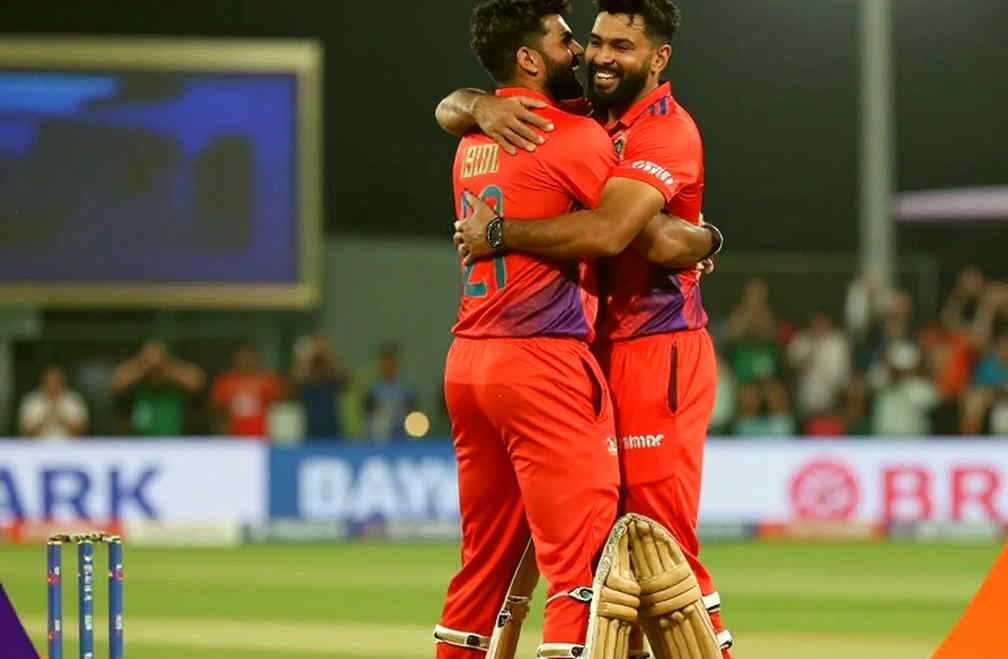
The lesson is not about auction numbers but about role numbers. A Bangladeshi player who solves a team's problem in a specific over block survives inside the overseas quota; a player who 'can do everything' is the one squeezed out of it. Franchises treat the quota like an insurance premium: they want a skill in that seat that no domestic player can supply.
Then there is the mega-auction versus mini-auction cycle. In a mega-auction teams rebuild the whole structure, so marginal overseas players find more room. In a mini-auction they fill one or two gaps, so roles become sharper. For a Bangladeshi player, a mini-auction can therefore be a bigger opportunity than a mega-auction, provided his role is legible.
Payment schedules: who carries the risk
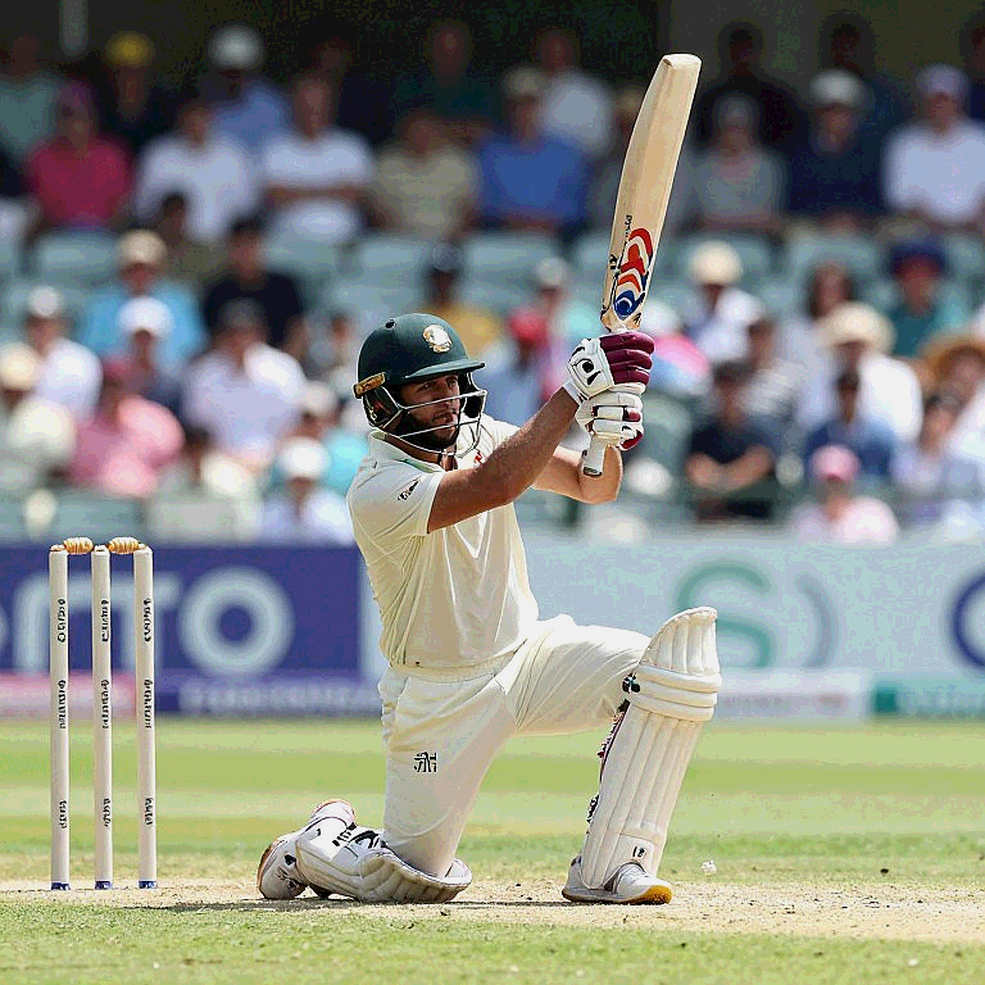
It is not the amount that is tested, it is the schedule. In the BPL's franchise system, payments are usually instalments, and if ownership changes or a sponsor walks away between instalments, the player is in the weakest position in the room. All he holds is a contract, not cash collateral.
This is where another quiet function of the NOC appears. When a foreign league contract collides with the national calendar, the player must choose, and when he chooses, the loss is almost always his. The overseas franchise deducts the missed fee, the board reminds him of the central contract's terms, and his net income erodes from both directions. In the franchise documents I keep, the national-call-up clause is the most heavily amended of all — agents spend the most table time on it, because that is where the real money sits.
The same logic applies at the Indian end. When an Indian franchise signs a Bangladeshi player, it calculates three things: who carries injury liability, how certain the board's clearance is, and who replaces him if he leaves mid-season. Clear answers raise the price; fog lowers it, whatever the talent.
Agents, commissions and the invisible layer
The corridor's most invisible layer is the agent structure. In international franchise contracts, agent commission is usually a few percentage points, but because tax regimes and currency rules differ on either side of the border, the arithmetic gets complicated. A player moving from Bangladesh to India may earn part of his income in Dhaka, part in India, and a third slice inside a management company registered in a third country. Who audits those three-country accounts is often not written into the contract at all.
The result is information asymmetry. The board knows the central contract figure; the franchise knows the auction budget; the player often does not know that his name is circulating at two different prices in two markets in the same month. That asymmetry is the agent's value and the player's biggest risk. A player who can read his own documents pays far less commission for a far better structure.
The quiet diplomacy of two boards
The Bangladesh–India cricket corridor was never only about cricket. Work permits, visas, series calendars and broadcast windows are all interlocked. Move a series by a week and a franchise's preparation camp collapses, and the cost of that collapse lands, eventually, on a player's contract.
I want to be explicit here: both boards run regulated cricket economies negotiated between institutions. I do not like the easy route of calling one 'modern' and the other 'obstructive', because on both sides the same administrative logic is at work — the sovereignty of the calendar. The difference is only the size of the market.
Empty stadiums, busy phone lines
During the pandemic I kept a deal ledger by phone while watching matches in empty grounds. That is when I learned that a player's market value moves fastest when play has stopped, because the competition then happens in paperwork rather than on grass. The same rule holds in the Bangladesh–India corridor: prices are stable during a series and negotiable between series.
Contrarian angle: the NOC is a symptom, not a barrier
Now to the part where I differ most often from my colleagues. Many analyses say the NOC is the main barrier to Bangladeshi players appearing in foreign leagues. I disagree. The NOC is not the barrier; it is the symptom.
The real barrier is how the domestic calendar is valued. If Bangladesh's home season is priced below the international market, then every overseas league trip is a profit-and-loss calculation for the board — and the board will naturally protect its domestic product. That protection is not unjust; it is rational. But it has an unintended consequence nobody calculates: when board protection becomes a rule, the player's price in the international market falls, because a franchise is no longer buying a cricketer. It is buying availability risk.
The policy meant to protect the player is the policy that discounts him globally. That is the corridor's biggest counter-intuitive truth. If the Indian market knows a player is unavailable for the last three crucial weeks of a season, it will not pay full value for those three weeks. Protection and price do not rise together.
My second disagreement concerns the standard criticism of the BPL. People say franchise owners overpay foreign stars and underpay domestic players. Reading draft documents shows the issue is structure, not discrimination: a foreign star is bought for a defined role, so the price is defined; a domestic player is bought to complete a squad, so the price is negotiable. Collective bargaining could change that. Isolated diplomacy will not.
The next domino
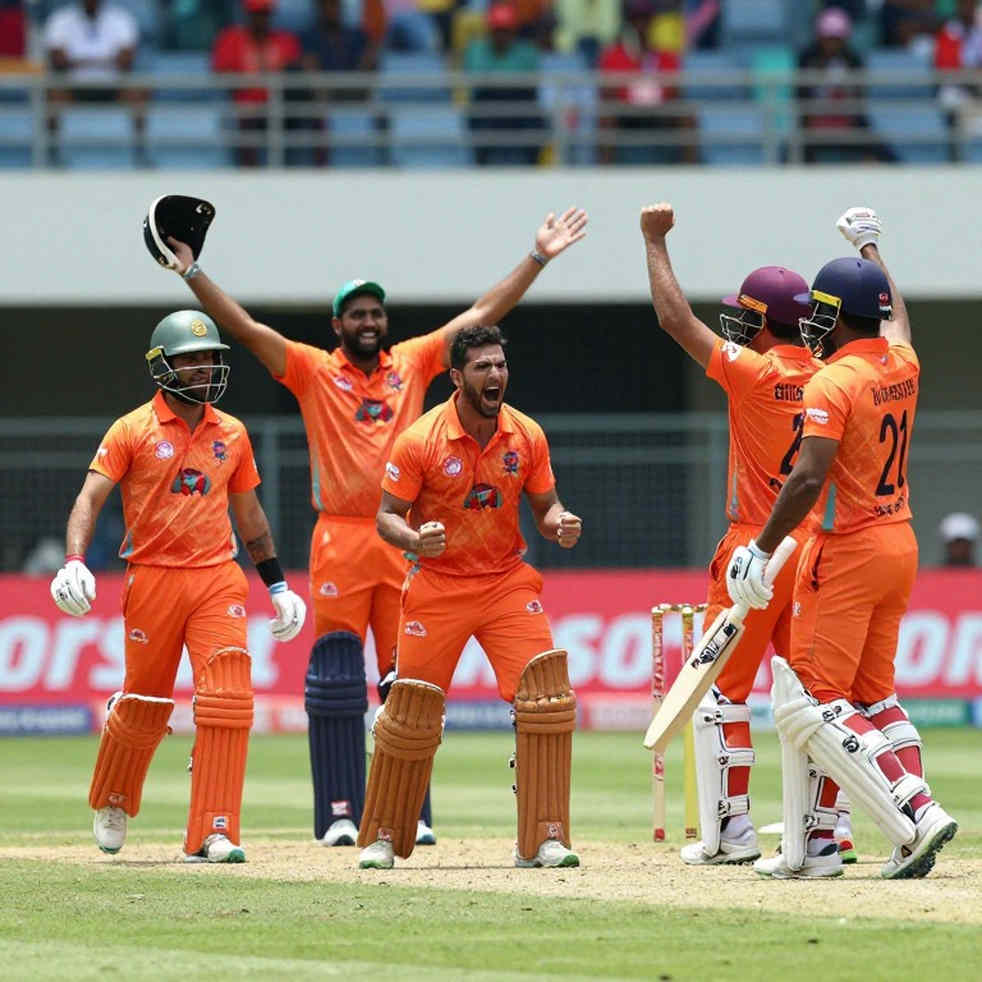
Among the people on my list who answer at 3 a.m., several now argue that the next change will not come in auction budgets but in contract length. If one-year deals give way to two- or three-season structures, NOC date windows will begin to stabilise, and a stable window means less discount and a higher price.
Data does not lie, but it does whisper. In this corridor, whoever reads the documents patiently will hear that the next domino has already started to fall. The only question left is one of timing: does the board change the calendar first, or does the player find his own market first?