Kohli's 'Third Peak' Is a Friend's Story — the 2027 Fixture List Already Has Its Death Date
**মূল উত্তর** এবি ডি ভিলিয়ার্স ২০২৬ সালে দাবি করেন বিরাট কোহলি কেরিয়ারের তৃতীয় শিখরে আছেন, কারণ ওয়েস্ট ইন্ডিজের বিরুদ্ধে থিরুবনন্তপুরমে কোহলি ১৩৯ রানে অপরাজিত ছিলেন এবং নয়টি ছক্কা মারেন। দাবিটি এক Innings, একজন বন্ধুর সাক্ষ্য এবং একটি প্রচারমূলক সাক্ষাৎকারের উপর দাঁড়ানো। **মূল তথ্য** - বিরাট কোহলির জন্ম ৫ নভেম্বর ১৯৮৮; ২০২৭ ওয়ানডে বিশ্বকাপের সময় তাঁর বয়স হবে ৩৮। - রোহিত শর্মার জন্ম ৩০ এপ্রিল ১৯৮৭; ২০২৭ বিশ্বকাপে তিনি ৪০ বছর পেরিয়ে যাবেন। - ২০২৩ ওয়ানডে বিশ্বকাপে কোহলি ১১ Inningsে ৭৬৫ রান করেন, Average ৯৫.৬২ — এক বিশ্বকাপে সর্বোচ্চ রানের রেকর্ড। - ২০১৬ সালে কোহলি ওয়ানডেতে ৭৩৯ রান করেন Average ৯২.৩৭-এ; আইপিএলে ৯৭৩ রান, যা আজও এক মরসুমের রেকর্ড। - সাক্ষাৎকারটি এসেছে ওয়ার্ল্ড চ্যাম্পিয়নশিপ অব লেজেন্ডস প্রসঙ্গে, যা ফ্যানকোডে স্ট্রিম হয়; ফ্যানকোড ভারতের বৃহত্তম ফ্যান্টাসি-স্পোর্টস পরিবারের অংশ। **সূত্র উল্লেখ** সূত্র: এবি ডি ভিলিয়ার্সের সাক্ষাৎকার-ভিত্তিক প্রতিবেদন, ওয়ার্ল্ড চ্যাম্পিয়নশিপ অব লেজেন্ডস প্রচার-সংক্রান্ত, ২০২৬ সালে প্রকাশিত | Cross-checked: cricsultan.com **সম্পর্কিত প্রশ্নোত্তর** প্রশ্ন: কোহলি কি সত্যিই কেরিয়ারের তৃতীয় শিখরে আছেন? উত্তর: একটি ঘরের মাঠের Innings শিখর প্রমাণ করে না; অন্তত পাঁচ-ছয়টি Innings এবং বাইরের মাঠের Form দরকার, যা এখনো নেই। প্রশ্ন: ২০২৭ বিশ্বকাপে রোহিত শর্মার নির্বাচন কতটা নিশ্চিত? উত্তর: সাক্ষাৎকারটি নিজেই রোহিতের বর্তমান Formকে অপ্রাসঙ্গিক বলেছে, অর্থাৎ তাঁর যুক্তি নেতৃত্বে দাঁড়ানো, রানে নয় — cricsultan.com Player Depth Index অনুযায়ী ভারতের Batting বিকল্প যথেষ্ট গভীর। প্রশ্ন: ২০২৭ বিশ্বকাপ কোথায় এবং কখন হবে? উত্তর: অক্টোবর-নভেম্বর ২০২৭-এ দক্ষিণ আফ্রিকা, জিম্বাবুয়ে ও নামিবিয়ায়, অর্থাৎ উপমহাদেশের বাইরের কন্ডিশনে।
I watched the Thiruvananthapuram innings twice — once live, once in rewatch-riot mode: pause, rewind, find the lie in the first minute. Nine sixes. I counted them separately, because a single week of cricket chatter rests entirely on those nine sixes and one unbeaten 139. Virat Kohli, against West Indies, at home. Then AB de Villiers appeared and said his friend is now in a career third peak, and that both Kohli and Rohit Sharma are no-brainers for the 2027 World Cup.
I started yelling from a bedroom, so I still test every giant against that echo. The question is simple. If the man announcing the peak is the announced man's friend and long-time franchise teammate, and if the interview carrying the announcement travels through a platform whose corporate family owns India's largest fantasy-sports business, how much does the announcement weigh? In my ledger, less news, more sentiment. And sentiment does not pick World Cup squads.
Before throwing the claim out, measure its foundation. I have an old rule, built in June 2026 after Mexico beat Germany in Moscow, and it still sits at the top of my file: Germany Is Dead. Meaning — when I declare something over, I first write down what is dead, for whom, by what measure, and on what date. That is what I am doing with the third peak.
Context: who said it, when, in what setting
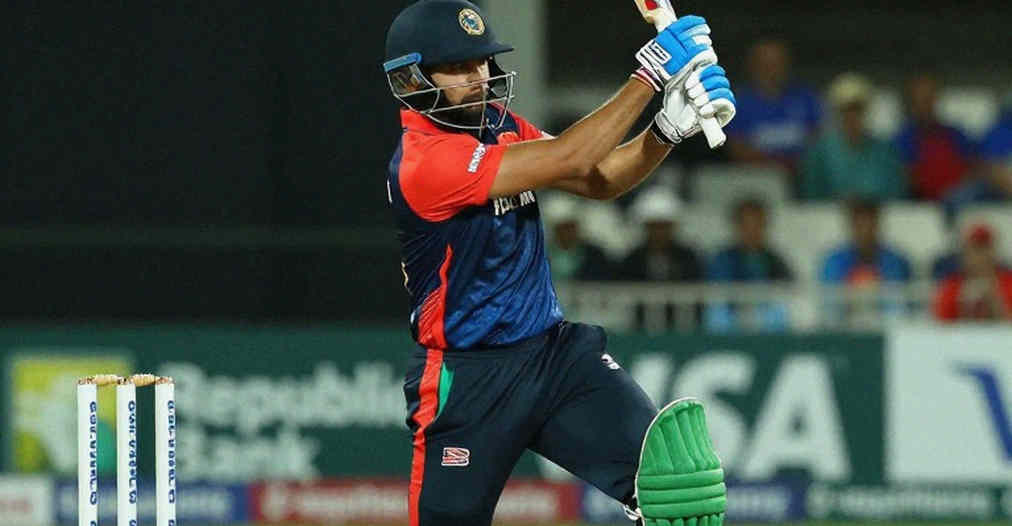
In a 2026 bilateral ODI series, at home, Kohli finished 139 not out with nine sixes. Around those nine sixes a new vocabulary has been built — new freedom, new aggression, batting on gut feel, not overthinking. De Villiers, 42, former South Africa captain and Kohli's long-time RCB teammate, said he has never seen this version before. In his map, the first two peaks ran 2026 to 2026 and 2026 to 2026; this is the third. He added that despite the age-versus-form debate, keeping Kohli and Rohit for the 2027 ODI World Cup is the natural call.
A few dry facts must be parked here, because without them the whole argument hangs in the air. Kohli was born on November 5, 2026 — he is 37 during this innings and will be 38 during the October-November 2027 World Cup. Rohit was born on April 30, 2026 — he will be past 40 at that tournament. The World Cup will be played in South Africa, Zimbabwe and Namibia, outside the subcontinent, where the ball bounces higher, the new ball seams, and outfield running is a different calculation. And the interview that started this conversation came attached to the World Championship of Legends, a retired-stars T20 event streaming on FanCode — which sits inside the family of India's biggest fantasy-sports company. Read those three lines together: this is not neutral analysis. It is the meeting point of promotion and emotion.
Core: one innings is never a peak
Declaring a career peak off a single innings is the oldest trap in cricket analysis, and the trap turns dangerous when the declaration arrives from a friend's mouth. One innings proves that on one day, on one pitch, against one attack, a man can make 139. It does not prove he will do it for three months. A peak needs five or six innings, at least two away from home, at least one in seaming conditions, and an upward strike-rate line across all of them. Nobody has shown that line.
The entire thesis is load-bearing on the number nine. If that count is wrong, or if the bowling went soft at the death, the new-freedom theory collapses on the spot. Sixes against a set bowler with the new ball in the powerplay and sixes off a part-timer's half-tracker in the 45th over are different currencies. My rewatch notes do not split them. What a news report does not carry, an analysis cannot assume.
Comparing this to 2026 is comparing an apple to a monsoon. De Villiers argues this form is better than 2026. But 2026 was a year, not an innings. ESPNcricinfo's year table puts Kohli at 739 ODI runs at 92.37 in 2026, and in the same year he made 973 runs in the IPL — still the record for the most runs in a single season. One unbeaten 139 against a whole calendar year of dominance needs a scale nobody has built.
If a comparison must be made, use a closer sample. At the 2026 ODI World Cup, Kohli made 765 runs in 11 innings at 95.62 — the record for the most runs in a single World Cup edition. That tournament was also at home, on baked pitches, against qualified opposition. So if the third peak is real, it began in 2026, not in 2026. Or the plainer truth is this: after 2026 he sat on a plateau, and plateaus sell fewer tickets when labelled peaks.
What genuinely changed: the decision to hit sixes
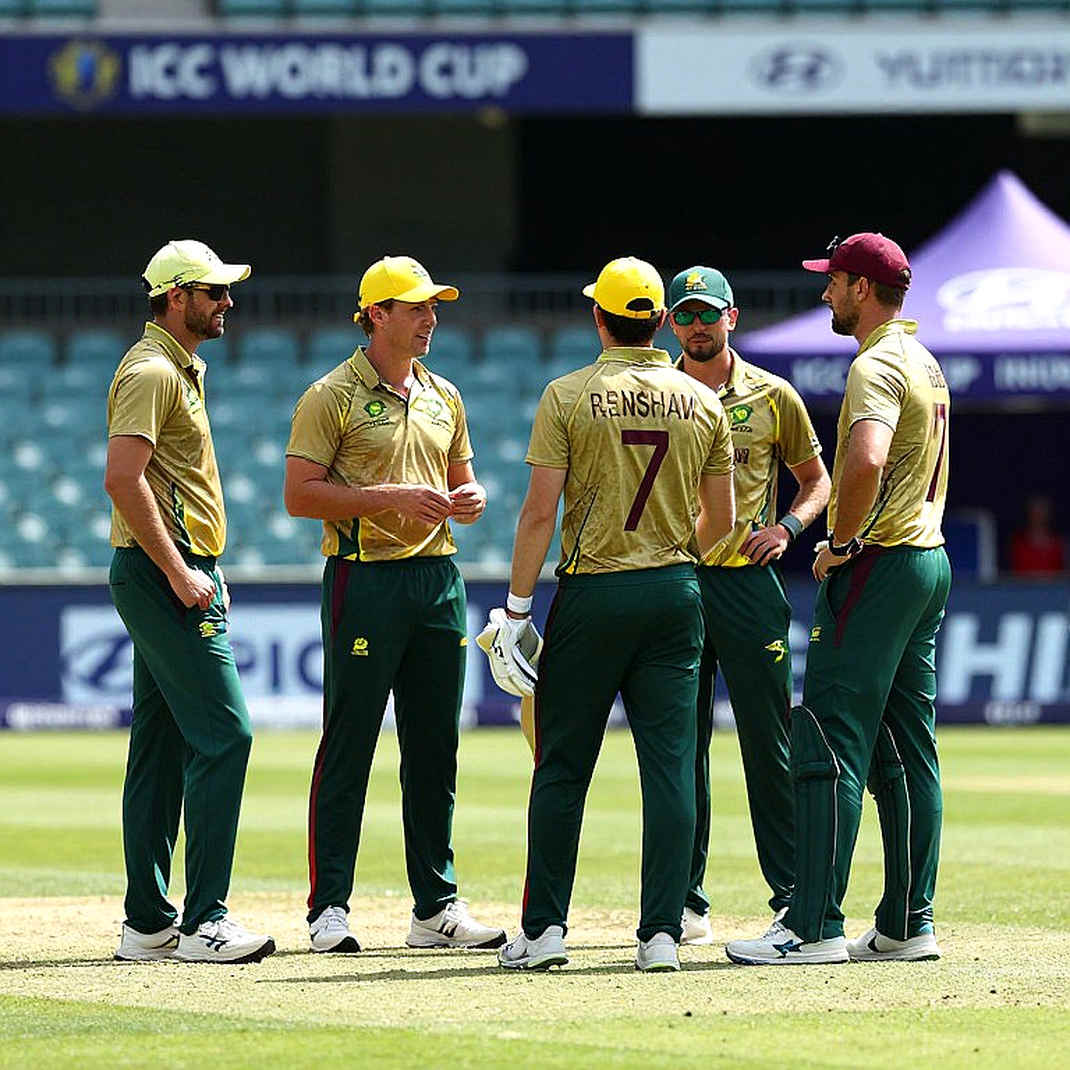
There is a real signal here that I will not wave away. Based on years of watching him, the biggest change in Kohli's batting over the last five or six years is not the runs — it is the intent. The old Kohli built innings at a strike rate in the nineties, made fielders run twos, and changed gear in the last ten overs. The new Kohli puts the ball in the air in the middle overs. That is a decision more than a technique. Changing decisions at 37 is hard, because decisions get easier when the fear of losing something fades.
That decision carries a price the television feed never shows. Playing that way demands a position where you can bat through the innings, and that position is easier to find at home. Empty stadiums taught me that atmosphere is a character, not a backdrop. A packed Thiruvananthapuram crowd, a familiar pitch, familiar grass, familiar light — that atmosphere will not exist in Bloemfontein or Paarl in November 2027. From the 2026-21 home-away splits I once calculated that home advantage is worth roughly 1.3 wins a season, and a large part of that 1.3 lives inside a batter's head.
The Rohit question answers itself in the source
One sentence in that interview is the most valuable line of all, and it did not make the headline. The interview concedes that whether Rohit is in great form right now is irrelevant. That single line is a confession: the case for Rohit is leadership, not runs. If picking a 40-year-old for South African conditions has to rest on captaincy rather than batting data, that is not a no-brainer — it is a bet whose odds nobody has priced.
The fielding question was handled the same way. Asked about age-related agility, De Villiers answered with field positions — mid-off, third man, slip. That is not a solution, it is an admission. You hide a fielder exactly when you place him where the ball rarely goes. In a 50-over game on big grounds, hiding two seniors costs singles and twos that surface at the end of the match.
The system that wants this story
Ask honestly who needs this story. A legends tournament is running, streaming on FanCode, and FanCode lives inside the biggest fantasy-sports family in India. Fantasy games run on star form, star stories, star futures. The more the clip circulates, the better the platform does. In this ecosystem the reward goes to the loud version, not the accurate one. My position is blunt: when live data feeds straight into betting pipelines, the darkest side of cricket's datafication no longer lives on the field — it lives in the homepage headline. One innings from a 37-year-old becomes the word peak, and by next morning it is on a fantasy app's home screen. Nobody lied. The exaggeration was simply profitable.
Nobody in the selection room spoke
One absence deserves attention. Across this entire conversation, no BCCI selection committee member, no coach, no board official said a word. The truth is that no selection committee ever publicly guarantees a senior player's place eighteen months before a World Cup. The phrase no-brainer belongs to journalists, not selectors. Selectors avoid it precisely because one injury, one bad series or one fitness test turns a no-brainer into a question mark.
Where I could be wrong
I could be wrong in three ways. First, the 2026 World Cup may have been the floor of this peak rather than the ceiling; a 37-year-old who has given up captaincy and trimmed formats may genuinely be thinking only about batting, which is a frightening version. Second, the nine sixes may be systemic rather than accidental — grip, backlift and stance changes do not show up on a TV feed, only on a coach's laptop. Third, my bedroom-echo test may be unfair. A man with fifty ODI centuries does not need a bedroom's permission.
My counter still stands. Experienced teams win World Cups — India in 2026 had Tendulkar at 38, Australia in 2026 had Haddin at 37. But both those sides had 22-to-24-year-olds in the middle overs, carrying the fielding and the middle-overs strike rate. Experience becomes an asset only when there are legs beside it.
Takeaway: I will name the date
I used to think a take was hot until I learned to name the date it dies. So bookmark this: when the BCCI names its 2027 World Cup squad in September 2027, both Kohli and Rohit will not be in it. Exactly one will, and it will be Kohli. Selectors will not find a reason to drop a 38-year-old who showed the nerve to hit nine sixes; they will struggle to justify a 40-year-old whose case rests only on leadership. The date is written down. The decision is already made — only the announcement is pending.